
Views: 0 Author: Site Editor Publish Time: 2026-02-12 Origin: Site


Agriculture today demands precision, and agricultural sprayers play a central role in delivering it. From applying fertilizers and pesticides to distributing herbicides and foliar nutrients, sprayers ensure that crops receive the exact treatment they need—no more, no less. Without the right equipment, even the best inputs can be wasted. But with so many sprayer types available, farmers often ask: How many types of sprayers are there in agriculture? The answer isn’t just a number—it depends on how they're powered, mounted, and used. From handheld units for backyard plots to advanced drone systems for steep hillsides, each type has a purpose.
In this article, we’ll break down the main categories of agricultural sprayers, explain how each type works, and guide you in selecting the right one for your farm’s needs—whether you're managing five rows of tomatoes or five hundred hectares of wheat.
Before diving into individual machines, it helps to understand how Agricultural Sprayers are commonly classified.
Sprayers differ mainly by how they generate pressure:
Power Type | Ideal For | Output & Portability |
Manual | Small gardens, spot-treating | Low, high mobility |
Battery-Operated | Greenhouses, mid-sized farms | Medium, quiet |
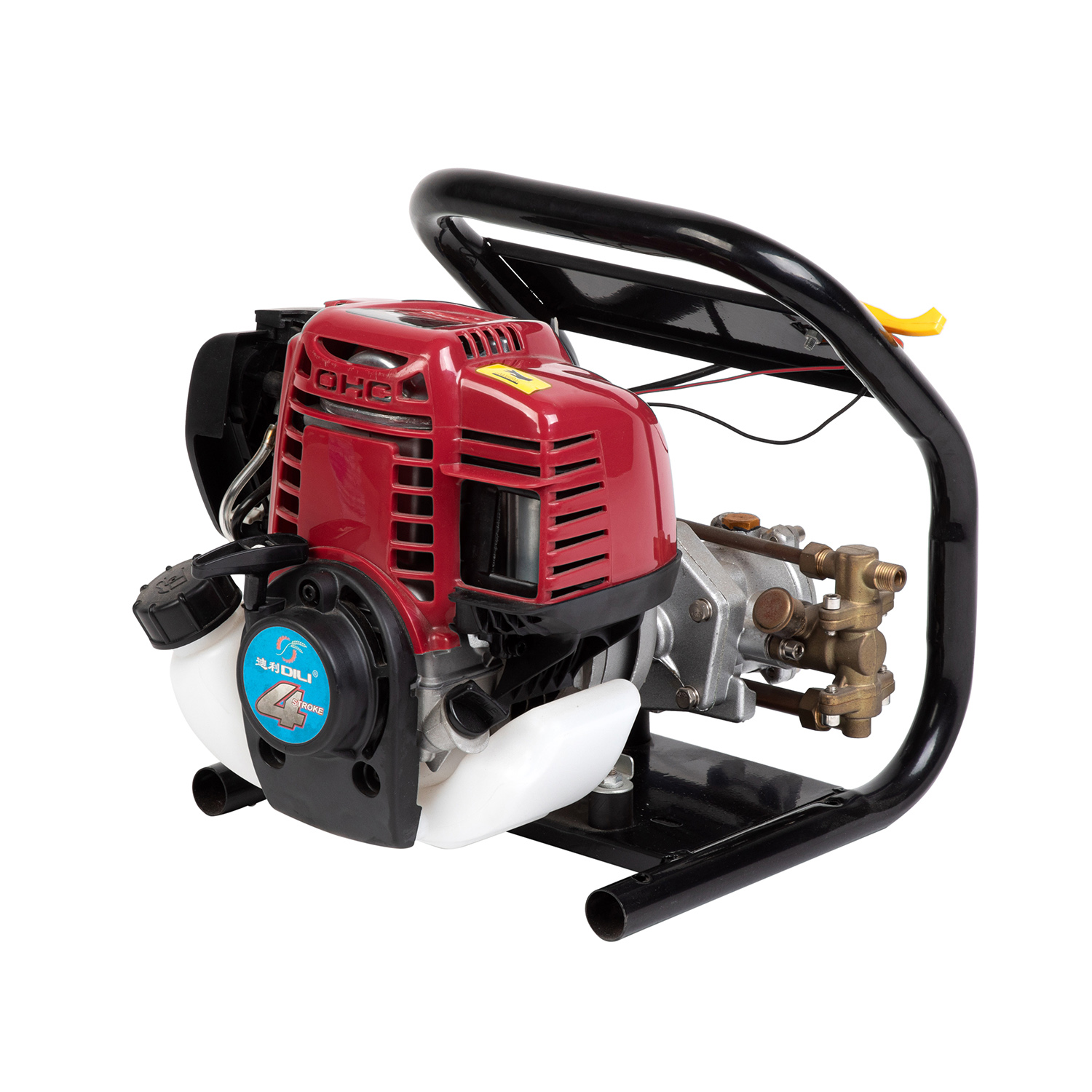
Engine-Driven | Larger plots, orchards | High, portable |
Tractor-Powered | Broadacre fields | Very high, fixed use |
Each offers pros and trade-offs. Manual sprayers are affordable but labor-heavy. Tractor-powered units cover more but cost more too.
There’s also how the sprayer is mounted. This influences tank size, boom width, and operator fatigue:
● Handheld for micro gardens or weed patches
● Backpack for hilly land or perimeters
● Mounted for medium fields and precision row crops
● Trailed for longer runs, fewer refills
● Self-Propelled when efficiency is top priority
● Aerial (Drone or Aircraft) when speed or terrain demand air-based spraying
Mounting style often determines coverage speed, tank size, and field accessibility.
How liquid becomes mist matters. There are three technologies farmers should know:
1. Hydraulic Energy – Relies on liquid pressure alone. Most common.
2. Gaseous Energy – Uses air velocity to disperse fine mist. Reduces drift.
3. Centrifugal Force – A spinning disc breaks up droplets. Used in niche tech like rotary sprayers.
Each method changes how chemicals land on crops—key to performance.
Handheld sprayers usually hold 1–5 liters. Operators pump them manually to build pressure.
They work best for:
● Garden plots
● Greenhouses
● Spot weed control
● Small nutrient applications
Their strength lies in precision. You can target individual plants or problem areas without overspray. For commercial farms, they often support maintenance tasks rather than full-field work.
Backpack sprayers increase capacity to 10–25 liters and sit comfortably on the operator’s back. They come in manual, battery-powered, and engine-driven versions.
They suit:
● Orchards
● Nurseries
● Vineyards
● Uneven terrain
Backpack sprayers offer strong mobility while covering more ground than handheld units. Many small and mid-sized farms rely on them for routine spraying.
Manufacturers like Kesiwo supply customizable backpack models, combining durable construction, strict quality control, and cost-effective designs. Their focus on inspection and certification helps B2B buyers maintain consistent performance across multiple seasons.
Boom sprayers dominate row-crop agriculture.
They feature horizontal booms fitted with multiple nozzles, delivering uniform coverage across wide swaths.
Two main formats exist:
● Mounted boom sprayers: Attach directly to tractor three-point hitches.
● Trailed boom sprayers: Pull behind tractors and carry larger tanks.
They work well for:
● Wheat
● Corn
● Soybeans
● Large vegetable fields
Boom width often ranges from 12 to 36 meters or more. This makes them ideal for high-efficiency field operations.
Air-blast sprayers use powerful fans to push spray droplets deep into dense foliage.
They are standard equipment in:
● Orchards
● Vineyards
● Tree nurseries
Instead of relying on pressure alone, they combine air velocity and liquid flow to reach hidden pests inside plant canopies. This approach improves coverage where leaves overlap heavily.
Self-propelled sprayers are purpose-built machines with their own engines, chassis, and operator cabins.
They usually include:
● Large tanks
● Wide booms
● GPS guidance
● Section control
● Automatic pressure regulation
Large commercial farms use them to cover massive acreage quickly. High clearance allows spraying even when crops grow tall.
While they require higher investment, they deliver unmatched productivity per hour.
Aerial spraying includes both traditional aircraft and modern drones.
● Fixed-wing planes and helicopters handle vast areas during pest outbreaks or wet field conditions.
● Drone sprayers focus on precision. They excel in small plots, hillsides, and hard-to-reach areas.
Drone systems also collect field data, helping farmers adjust application rates in real time. Their adoption continues to grow as regulations evolve.
Some applications need specialized equipment:
● Electrostatic sprayers: Improve droplet adhesion to plant surfaces.
● Thermal and mechanical foggers: Produce ultra-fine mist for enclosed spaces or horticulture.
● Rotary disk sprayers: Create uniform droplets using centrifugal force.
● Mist blowers: Combine airflow and liquid for targeted treatments.
These tools support niche crops and controlled environments.
Sprayer Type | Typical Capacity | Best Use Scenarios |
Handheld | 1–5 L | Gardens, spot treatment |
Backpack | 10–25 L | Orchards, uneven terrain |
Boom | Large tanks | Row crops, open fields |
Air‑Blast | Medium–large | Vineyards, tree crops |
Self‑Propelled | Very large | Commercial farming |
Aerial / Drone | Small–medium | Hillsides, precision use |
Specialized | Varies | Horticulture, niche crops |
They shape and direct the spray. Types include flat-fan, hollow-cone, and air-induction nozzles. These affect droplet size, spread angle, and penetration.
Dirty or worn nozzles ruin your coverage. Clean or replace often.
Pumps generate the pressure. Choose from:
● Diaphragm – Ideal for corrosive liquids
● Centrifugal – Handles high flow, low pressure
● Roller – Low cost, common in basic sprayers
Each has trade-offs in flow rate, power source, and maintenance.
Tank size affects how often you stop. Materials include polyethylene and fiberglass, which resist chemicals and UV.
Capacity ranges:
● Handheld: 1–5L
● Backpack: 10–25L
● Trailed: Up to 4000L
● Self-propelled: Often 5000L+
Booms carry nozzles. Width determines how many passes you make. Hoses connect the tank to the delivery system—check regularly for leaks.
Component | Main Role | Key Notes |
Nozzles | Shape spray | Droplet size, coverage |
Pumps | Build pressure | Diaphragm / Centrifugal / Roller |
Tanks | Hold liquid | 1–5000L+, chemical‑resistant |
Booms | Carry nozzles | Width controls efficiency |
Hoses | Move liquid | Check often for leaks |
Each part plays a specific role in overall spraying performance. Neglect one, and the entire system may underperform or fail in the field.
Smart buyers ask questions. Consider:
1. How many hectares do you spray weekly?
Fewer than 5? Backpack. 50+? Boom or self-propelled.
2. What terrain do you face?
Hills? Use drones or backpacks. Flat fields? Bring in the boom.
3. How often do you apply?
Daily usage justifies bigger tanks.
4. What’s your labor situation?
Manual sprayers need people. Automated systems need tech training.
Farmers and ag distributors alike benefit from equipment that aligns to both workflow and budget. That’s why brands like Kesiwo attract buyers. Their sprayers are not just well-priced—they’re backed by full CE and ISO certifications, customizable designs, and hands-on post-sale support.
As farming evolves, so do the tools behind it. Modern agricultural sprayers are no longer just about pressure and coverage. they now include smart technologies that improve accuracy, reduce waste, and support sustainability across all farm sizes.
Innovation Area | Key Benefit | Functionality Summary |
GPS & Auto-Guidance | Minimize overlap and missed areas | Enables precise movement and chemical savings |
AI & Data Analytics | Smarter flow adjustments | Adapts to crop density and field conditions |
Sustainable Design | Reduce drift and chemical waste | Better droplet control, eco-focused engineering |
These innovations make spraying faster, cleaner, and more precise. turning traditional tools into intelligent systems that support both yield and the environment.
To keep agricultural sprayers working efficiently, regular maintenance is a must. It helps prevent costly breakdowns, ensures accurate application, and supports long-term reliability. Even simple upkeep tasks make a big difference in daily performance.
● Calibrate regularly to maintain correct application rates.
● Clean tanks and lines thoroughly after each job to prevent residue buildup.
● Inspect nozzles frequently for wear, clogs, or uneven spray patterns.
● Check hoses and fittings for cracks, leaks, or loose connections.
● Follow pump service schedules as recommended by the manufacturer.
● Wear proper PPE when handling and applying chemicals to ensure personal safety.
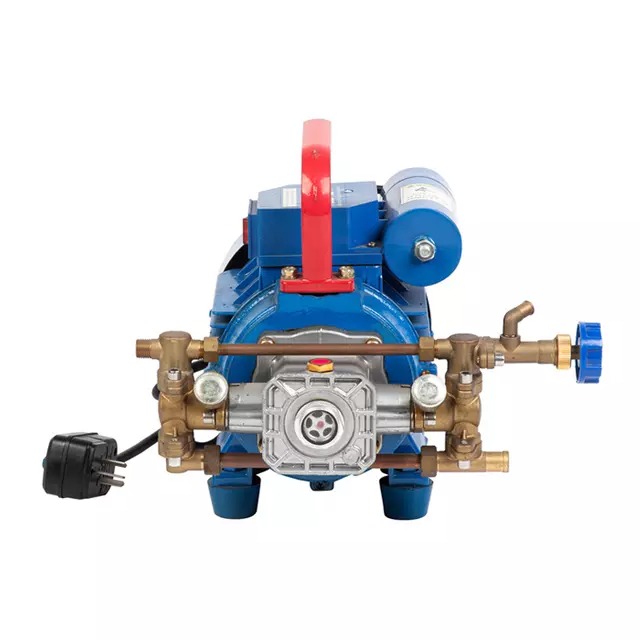
Agricultural sprayers come in many types, each designed to meet specific farming needs. From simple handheld units and backpack sprayers to advanced boom systems, air-blast machines, self-propelled rigs, drones, and specialized foggers, the variety reflects the diversity of crops, terrains, and operational scales in modern agriculture. Understanding these sprayer categories helps farmers, suppliers, and distributors make informed decisions based on field size, crop type, and application frequency. The right match between sprayer and task improves efficiency, reduces chemical waste, and protects yields.
Manufacturers like Taizhou Kesiwo Garden Tools Co., Ltd. play a vital role in supporting this decision-making process. Known for producing high-quality, customizable sprayers with strict quality control and reliable after-sales support, Kesiwo delivers equipment that meets real-world demands. Their products offer practical value—balancing performance, durability, and affordability—helping farmers operate more effectively across a range of agricultural environments.
A: The main types of agricultural sprayers include handheld, backpack, boom, air-blast, self-propelled, aerial (drone), and specialized sprayers. Each serves different crops, field sizes, and spraying needs.
A: Choosing the right agricultural sprayer depends on your farm size, terrain, crop type, and spray frequency. For large fields, boom or self-propelled sprayers are ideal; for smaller plots, backpack or handheld sprayers work best.
A: Agricultural sprayers are designed to meet specific operational needs—such as canopy penetration, terrain access, and application precision. This diversity helps optimize chemical use and protect crop yields.
A: Costs vary widely. Handheld sprayers start under $50, while advanced self-propelled or drone agricultural sprayers can exceed $100,000, depending on capacity, features, and automation.
A: Boom sprayers offer wider coverage and faster application, ideal for broadacre crops. Backpack sprayers, while more portable, are better suited for small-scale or uneven terrain operations.
A: Regular maintenance is essential. Clean nozzles, inspect hoses, and calibrate pressure before each use to ensure your agricultural sprayer delivers accurate and efficient application.


