
Views: 0 Author: Site Editor Publish Time: 2026-02-05 Origin: Site


Spraying isn’t optional in modern farming—it’s essential. Whether preventing pests or boosting plant nutrition, the success of each crop cycle often depends on how effectively liquid treatments are applied. But that leads to a key question: Which tool is used for spraying in agriculture? The answer lies in a wide array of machines known as Agricultural Sprayers. These tools range from simple, budget-friendly handheld models to advanced, GPS-enabled machines built for scale and precision. Each type serves a different purpose depending on the farm’s size, terrain, and crop requirements.
In this article, you’ll discover the different types of Agricultural Sprayers, how they work, where they perform best, and what factors matter when choosing one. Whether you manage a small garden or a commercial farm, the right sprayer can make all the difference.
An agricultural sprayer is a tool designed to apply liquids—like pesticides, herbicides, and fertilizers—uniformly across crops. This precision reduces waste and enhances plant health.
Spraying isn’t just about pest control. It’s about targeted treatment. Whether preventing disease or boosting growth, uniform application ensures every plant gets what it needs without overdosing or missing areas.
Instead of a deep technical breakdown, here’s what matters most when you look at sprayers:
Component | Role in the Spraying System |
Nozzles | Shape the spray pattern, control droplet size and direction |
Pumps | Provide pressure to move the liquid through the system |
Tanks | Hold the treatment solution, size affects coverage range |
Booms/Hoses | Spread the spray across the crop rows evenly and efficiently |
Each part affects coverage, efficiency, and cost. For example, changing the nozzle type can switch your sprayer from targeting insects to feeding leaves.
Selecting the right nozzle type is crucial—flat-fan nozzles are often used for herbicides, while cone nozzles work well for fungicides and insecticides.
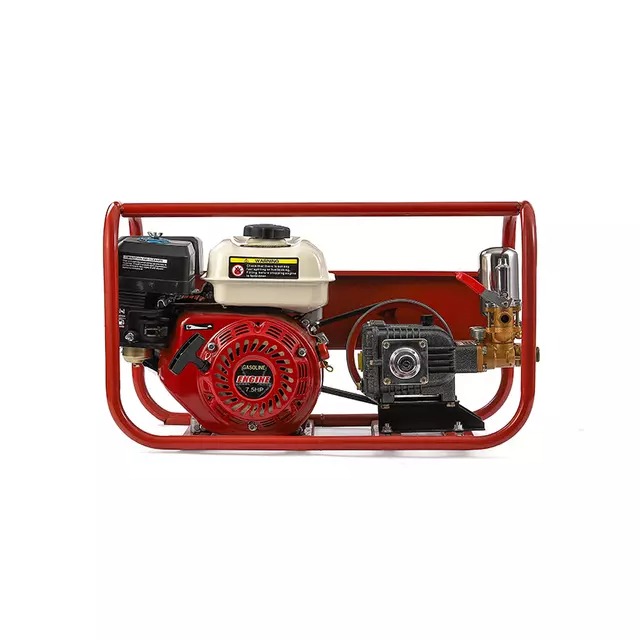
These are portable units, often operated manually or with battery power. Best suited for:
● Small vegetable plots
● Spot treatments
● Greenhouses
Farmers favor these for their low cost, mobility, and ease of use.
These sprayers mount on tractors or are towed behind. They offer:
● Wide spray coverage
● Large tank capacities
● Efficient field operations
Ideal for medium to large farms, especially those growing row crops like corn, wheat, or soybeans.
These high-tech machines are self-contained, with engines, driver cabins, and adjustable booms. Advantages include:
● High-speed coverage
● Precise GPS-based spraying
● Comfort during long hours
Used mainly on large commercial farms.
Air-blast sprayers are built for orchards and vineyards. They use fans to blast droplets into dense canopies, ensuring every leaf is reached.
● Excellent for tree fruits and grapevines
● Better canopy penetration
● Used where traditional booms aren’t effective
Drones and fixed-wing aircraft are increasingly used in hard-to-reach areas or during emergencies. Benefits include:
● Speed and agility
● Access to muddy or uneven ground
● Lower risk of soil compaction
Type | Best Use Case | Key Advantage |
Knapsack/Handheld | Small plots, greenhouses | Low cost, portable |
Tractor-Mounted/Trailed | Medium–large row crops | Wide coverage, efficient |
Self-Propelled | Large commercial farms | High-tech, GPS-enabled |
Air-Blast | Orchards, vineyards | Canopy penetration |
Drone/Aerial | Hard-to-reach areas | Fast, minimal compaction |
Farm size, crop density, and terrain define what sprayer works best. For example, steep land with tree crops favors drones or knapsack sprayers. Wide, flat fields suit mounted or self-propelled machines. Here’s how it breaks down:
Farm Type | Best Sprayer Option |
Garden/Greenhouse | Handheld or Knapsack |
Mid-Sized Row Crops | Tractor-Mounted or Trolley |
Orchards/Vineyards | Air-Blast or Drone |
Broadacre Fields | Trailed or Self-Propelled Boom |
Soil that’s too wet or fields that slope can prevent large sprayers from operating safely. In these cases, portable units or aerial systems help farmers stay productive without harming the field.
Sprayers range from under $100 for basic models to over $150,000 for GPS-guided machines. It’s not about buying the most expensive one. Consider cost-per-acre and long-term efficiency gains.
Kesiwo’s range of products addresses both ends—affordable manual sprayers for small plots and robust mounted models for serious acreage. Farmers appreciate their balance of price and durability, especially in emerging markets where cost efficiency is critical.
These systems are either mounted directly onto a tractor’s three-point hitch or towed behind on a trailer. Once in motion, the booms extend horizontally across the field, equipped with evenly spaced nozzles that spray liquid as the tractor moves. This setup allows for consistent coverage over wide areas in a single pass, making them ideal for large and uniform crop rows.
Tractor-mounted and trailed sprayers are particularly suited for wide, open-field operations where efficiency and coverage are critical. These machines thrive in large-scale agricultural environments where consistency and speed are top priorities.
Application Area | Example Crops or Tasks |
Broadacre Farming | Corn, Soybeans, Wheat |
Pasture Maintenance | Grassland spraying, weed control |
Large Vegetable Plots | Tomatoes, Potatoes, Leafy Greens |
● Boom Width: From 8 feet to over 100 feet
● Tanks: Often 200–1000+ liters
● Pressure Controls: Maintain consistent flow
● Nozzle Options: Adjustable for droplet size and pattern
Kesiwo’s tractor-mounted sprayers are engineered for durability and ease of use. Their lightweight yet strong frames and high-capacity tanks make them ideal for long hours in the field.
Modern sprayers aren’t just tanks—they’re computers on wheels. GPS lets machines follow optimized routes and avoid overlaps. This cuts chemical use and boosts results.
VRA (Variable Rate Application) systems use sensors and maps to adjust spray output. Plants get exactly what they need, where they need it.
Technology Feature | Benefit to the Farmer |
GPS Auto-Steer | Perfect coverage, fewer missed spots |
Variable Rate Application | Reduces waste, maximizes efficiency |
Spray Data Logs | Tracks what was applied, when, and where |
Farms using these features often see 10–20% savings on chemicals (data to be verified) while improving yield consistency across fields.
Drone sprayers are changing how farmers manage difficult or sensitive terrain. Their ability to fly low and follow precise flight paths allows for efficient, targeted spraying where traditional equipment can’t reach or operate safely.
Advantage | Practical Benefit |
Navigate slopes and muddy areas | Access tough or unstable terrain |
Low-altitude spraying | Reduces chemical drift and waste |
No ground contact | Minimizes soil compaction and labor need |
● Orchards
● Rice paddies
● Vineyards
● Wetlands
● Organic farms (for precise, minimal chemical use)
Sprayer Type | Best For | Advantages |
Knapsack | Gardens, small farms | Portable, budget-friendly |
Trolley | Medium plots | Larger tank, easy movement |
Tractor-Mounted | Large farms | Wide coverage, efficient |
Self-Propelled | Broadacre crops | Fast, tech-integrated |
Drones | Uneven terrain, orchards | Precise, minimal drift |
Note: Use this table as a quick reference when evaluating sprayer types based on your land and labor situation.
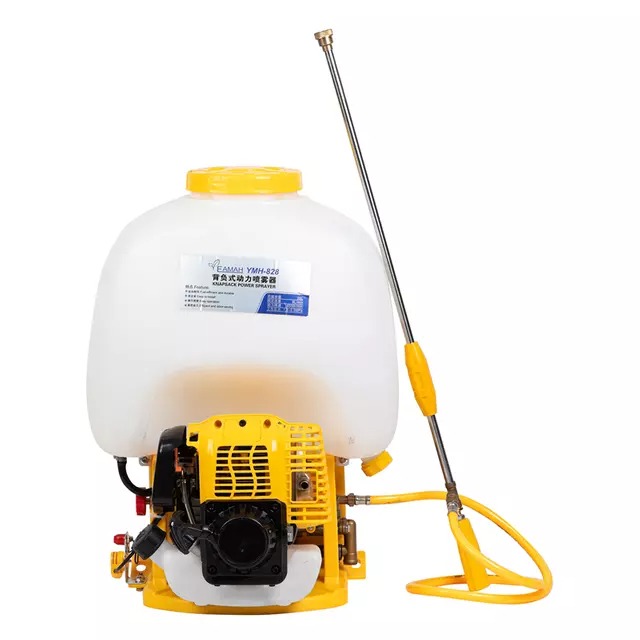
Before each spraying season—or whenever switching to a new chemical—it's essential to calibrate your sprayer. This process ensures that the right amount of product is applied per acre, preventing costly overuse and protecting both crops and the environment from improper exposure.
Thoroughly clean tanks, hoses, nozzles, and filters after every use to prevent clogging or residue buildup. Inspect and replace worn parts early to avoid breakdowns during critical spraying periods, keeping operations smooth and efficient throughout the season.
● Always wear gloves, goggles, and long sleeves to protect your skin and eyes.
● Store all chemicals in a cool, ventilated, and locked location away from sunlight or unauthorized access.
● Carefully follow all product label instructions when measuring, mixing, or applying any treatment to ensure safe and legal use.
No matter the size of your operation—whether it's a small greenhouse or a large-scale commercial farm—Agricultural Sprayers play a critical role in supporting crop health and maximizing productivity. Choosing the right tool depends on several factors, including land size, crop type, terrain, and budget, all of which shape how effectively your spraying tasks are completed. A well-matched sprayer ensures precise application, reduces waste, and saves labor over time. From handheld units to advanced, GPS-guided machines, each type serves a specific need in the field. Farmers looking to invest wisely should focus on tools that not only meet their immediate requirements but also adapt to long-term goals.
Taizhou Kesiwo Garden Tools Co., Ltd. offers a wide range of reliable, customizable sprayers designed for real-world farming challenges. With strong product quality, flexible configurations, and dedicated service, Kesiwo helps growers improve efficiency, reduce costs, and maintain consistent results season after season.
A: Agricultural Sprayers are used to apply pesticides, herbicides, and fertilizers evenly across crop fields. They help improve plant health and protect yields by delivering treatments precisely where needed.
A: For small farms or gardens, handheld or knapsack Agricultural Sprayers are ideal. They are lightweight, easy to use, and offer great control for spot spraying and small-scale coverage.
A: The best choice depends on your farm size, crop type, terrain, and spraying frequency. Agricultural Sprayers range from simple manual models to GPS-enabled machines for large-scale operations.
A: Agricultural Sprayers increase efficiency by reducing chemical waste and saving labor. They ensure even coverage, which is critical for consistent crop quality and overall farm productivity.
A: Prices vary widely—from under $100 for manual sprayers to over $100,000 for advanced self-propelled units. Choosing the right sprayer balances cost with farm needs and long-term value.
A: Check for clogged nozzles, low pressure, or faulty pump components. Regular maintenance is essential for keeping any Agricultural Sprayer running smoothly and spraying accurately.


