
Views: 0 Author: Site Editor Publish Time: 2026-09-29 Origin: Site


Are you tired of back-breaking hours spent planting seedlings by hand? Imagine a damp spring morning. The soil is perfectly prepped. Yet, the thought of crawling along 500 feet of plastic mulch feels daunting. A manual seedling transplanter solves this painful problem efficiently. It fundamentally transforms a grueling chore into a brisk, upright walk.
By eliminating the need to constantly bend over, this equipment accelerates your daily planting pace. It protects your lower back and knees from chronic strain. In this comprehensive guide, you will learn exactly how to evaluate and select the right equipment. We will help you match the exact model to your specific farm size, soil composition, and crop type.
Recent agricultural market analyses highlight a significant shift in mid-sized farming operations. As labor costs rise globally and farm worker shortages persist, growers are moving away from purely manual labor. Instead, they are increasingly investing in semi-automated, ergonomic hand tools. This trend bridges the gap between slow hand-trowel work and prohibitively expensive tractor-mounted machinery. Equipment that maximizes human efficiency without heavy fuel reliance is no longer just a luxury. It is a commercial necessity for maintaining profitability and sustaining farm operations.
A manual seedling transplanter significantly increases planting speed while drastically reducing physical strain.
The choice between a single-handle and double-handle model depends strictly on your soil composition and operational scale.
Matching the transplanter tube diameter to your specific seedling plug size is critical to prevent internal equipment jamming.
Stainless steel construction provides superior durability and rust resistance compared to cheap plastic or coated iron.
These tools operate optimally in well-tilled soil or through plastic mulch but require specific design modifications for heavy clay.
A manual seedling transplanter is a handheld, gravity-fed agricultural tool. It is engineered to streamline the planting process. Structurally, it consists of a hollow vertical tube with a mechanical jaw at the base. The operator simply drops a seedling into the top chute. Next, they push the pointed base into the soil. Actuating the handle mechanism opens the beak. Finally, lifting the tool leaves the seedling securely planted in the earth.
For market gardeners and small-scale farmers, adopting this specific tool addresses several severe operational bottlenecks.
Ergonomics and Physical Health: Traditional planting requires constant kneeling and stooping. This tool allows operators to plant from a natural standing posture. It mitigates the long-term risk of musculoskeletal injuries.
Operational Efficiency: The mechanical sequence takes only seconds. Under optimal soil conditions, an experienced operator can place up to 1,000 seedlings per hour. This substantially lowers overall labor costs.
Versatility Across Crops: The hollow tube design easily accommodates vegetable plugs, bulbs, and large seeds. This consolidates your equipment shed.
Plastic Mulch Compatibility: The pointed mechanical beak is specifically engineered to puncture plastic mulch cleanly. This precise entry minimizes the hole size, retains vital soil moisture, and limits surrounding weed growth.
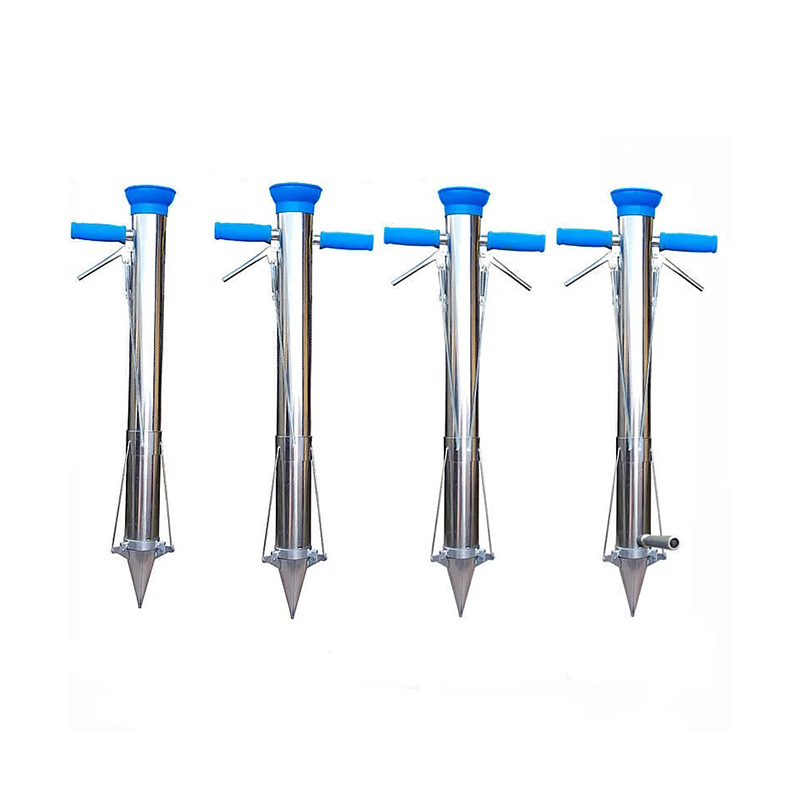
Selecting the correct equipment requires evaluating technical specifications against your specific field conditions. Visual similarities between models can be highly deceiving. Therefore, assessing the primary engineering factors below is essential before making a purchase.
The structural material directly impacts the lifespan and field performance of the tool. 304 stainless steel is widely considered the industry standard. It offers exceptional resistance to rust and corrosion. This is vital since the implement is constantly exposed to moisture, soil acidity, and liquid fertilizers. Furthermore, the smooth internal surface of a stainless steel tube prevents wet soil from adhering to the walls. This ensures a clean drop for every seedling. Lower-cost alternatives made from thin coated iron will bend upon impact with subterranean rocks and degrade rapidly under commercial use.
A critical technical specification is the internal diameter of the cylinder. This measurement must strictly correspond to the size of the plug trays utilized in your greenhouse. Seedlings grown in 128-cell trays possess much smaller root balls than those cultivated in 50-cell trays.
You must select a model with a tube diameter slightly larger than your largest root ball. If the chute is too narrow, the seedling will jam midway down. This forces the operator to halt production and clear the blockage. Conversely, an excessively wide tube for a tiny seedling causes the plant to tumble and land sideways in the soil cavity. This leads to poor root establishment.
Ergonomics is a delicate balance between structural durability and operator fatigue. Equipment constructed with unnecessarily thick metal will undoubtedly exhaust the operator within the first hour of a long shift. On the other hand, a tool that is excessively light lacks the necessary kinetic mass to penetrate firm soil easily. The optimal weight typically falls between 1.5 to 2.0 kilograms. This specific range provides enough downward force to pierce the earth while remaining manageable for repetitive lifting.
Manual transplanters are highly dependent on proper bed preparation. They perform flawlessly in well-tilled, sandy loam soils where the mechanical beak can flare open without excessive resistance. If your farm features tougher, moderately compacted earth, you must seek out specific design modifications. Tools intended for firmer ground often feature reinforced beaks and integrated foot pedals. These additions allow the operator to apply their body weight to drive the implement into the ground.
The handle configuration represents the most significant structural variable in this category of equipment. Understanding the distinct mechanical differences will dictate which model perfectly aligns with your daily workflow.
Feature |
Single-Handle Transplanter |
Double-Handle Transplanter |
|---|---|---|
Operation Method |
One-handed trigger pull |
Two-handed pull/push mechanism |
Best Soil Type |
Loose, well-tilled, sandy loam |
Firmer, slightly compacted soil |
Planting Speed |
Extremely fast, allows carrying a tray |
Moderate, requires setting down trays |
Mechanical Leverage |
Standard leverage |
High leverage for tough ground |
The single-handle design utilizes a straightforward, one-sided lever mechanism. The operator grips the main vertical shaft with one hand and pulls an attached trigger lever to actuate the opening of the subterranean beak.
From a practical standpoint, the primary advantage here is one-handed operation. This configuration allows the user to comfortably hold a tray of seedlings in their non-dominant hand while operating the transplanter with the other. It entirely eliminates the need to wear a cumbersome carrying basket. For solo operators prioritizing speed and utility, a standard handheld single-handle seedling transplanter provides the exact leverage mechanics required for a highly streamlined workflow. These models are typically engineered to be lightweight and highly agile.
Conversely, the double-handle configuration requires the operator to utilize both hands. The user grasps two separate handles at the top of the unit and pulls them apart to force the base beak open.
This design offers superior field stability. When pulling the tool out of the ground, the symmetrical two-handed grip ensures the cylinder remains perfectly vertical. This prevents the accidental dislodging of the newly planted seedling. The wider fulcrum also provides enhanced mechanical leverage. If your field conditions require robust force, a handheld double-handle seedling transplanter expertly manages firmer agricultural resistance. The dual-grip system makes it significantly easier to open the jaws against dense soil pressure.
To maximize the return on your investment, it is crucial to understand how this implement interacts with different crop profiles. A mismatch between the crop and the equipment can lead to stunted growth or jammed mechanisms.
These tools are inherently designed for standard market garden vegetable plugs. Crops like tomatoes, cabbage, and broccoli are typically started in 50-cell to 128-cell trays. They produce compact root balls that hold together exceptionally well. The depth of the mechanical beak ensures that the plug is placed deep enough to access consistent subsurface moisture. This is an absolute requirement for the early establishment of heavy-feeding vegetables.
Many growers overlook the fact that a high-quality transplanter effectively doubles as a high-speed bulb planter. Planting garlic cloves by hand traditionally requires endless kneeling and digging. By utilizing this tool, you simply drop the clove down the chute. The implement guarantees uniform depth, thereby saving the farm from purchasing separate, specialized equipment.
While engineered primarily for live vegetative plugs, the transplanter functions as an excellent precision seeder for large-caliber seeds. Seeds such as corn, beans, and pumpkins are often too large for standard push-seeders. By dropping a single large seed down the cylinder and engaging the jaw, you can accurately place seeds at a uniform depth through crusty bare soil or plastic mulch.
Agricultural labor takes a well-documented, heavy toll on the human body. Prolonged stooping is a primary contributor to lower back joint degradation. When evaluating potential equipment, specific ergonomic features must be verified by the operator.
The overall height of the unit is paramount. Most standard models measure exactly 90 centimeters. This specification is highly deliberate. It accommodates the average adult stature, allowing the operator to drive the tool into the ground without hunching their shoulders. By maintaining a neutral posture, compressive forces on the spinal discs are drastically minimized.
Grip materials also play a vital functional role. Repetitive friction over thousands of planting cycles will quickly cause severe blistering. Premium models feature grips covered in high-density sponge foam or textured rubber. These materials absorb the minor shock generated when the metal strikes the earth. Additionally, the internal spring mechanism must be calibrated correctly. A heavy, stiff spring causes premature forearm fatigue. A weak spring fails to snap the beak completely shut, causing the tool to drag soil upward upon exit.
When comparing specification sheets across different manufacturers, look for specific engineering enhancements. These details separate professional-grade tools from basic entry-level options.
Adjustable Depth Marker: This is a horizontal plate located near the bottom of the tube. It prevents the tool from sinking too deeply into extremely soft, freshly tilled soil. An adjustable baffle allows the operator to set the exact planting depth, guaranteeing crop uniformity across the entire field.
Thickened, Reinforced Beak: The mechanical jaw absorbs all of the impact force. Look for models that specify hardened stainless steel at the jaw tips. A sharper, durable beak requires less downward force and cleanly slices through plastic mulch.
Integrated Foot Pedal: A foot pedal allows the operator to step down on the tool. This utilizes leg strength and body weight to penetrate the soil. It is highly recommended if your farm does not practice deep mechanical tilling.
Even with top-tier equipment, operational errors can quickly negate the benefits of the tool. Avoiding these common missteps ensures maximum efficiency and protects your gear from premature failure.
Mistake 1: Ignoring Tube-to-Plug Ratios. Purchasing a transplanter with a tube diameter identical to your plug size is a frequent error. The friction of the damp soil causes the seedling to jam halfway down the chute. Always purchase a model with an internal diameter slightly wider than your largest root ball.
Mistake 2: Operating in Hard Clay or Unworked Soil. Manual transplanters are designed for well-prepared agricultural beds. They are not excavation tools. Attempting to force the beak into un-tilled, hard clay will bend the linkage mechanisms and permanently misalign the jaws.
Mistake 3: Planting in Saturated Mud. Soil moisture levels must be monitored closely. If the soil is soaking wet following heavy rainfall, the mud creates a suction effect. It adheres to the inside of the mechanical beak, preventing the jaws from opening properly. The soil should ideally be moist but friable.
Choosing the correct manual seedling transplanter dramatically improves your daily farm operations. It effectively eliminates the physical strain of bending over while substantially decreasing overall planting time. By matching the tool's tube diameter and handle style to your specific soil conditions and seedling sizes, you establish a highly productive rhythm.
Stainless steel models consistently provide the most reliable long-term field performance. Review your specific agricultural requirements carefully and consider the scale of your planting. Ready to upgrade your farm's efficiency? Explore the full range of professional agricultural tools at Agro-tools to find the exact equipment tailored to your needs. Investing in the right tool will protect your body and pay for itself within a single growing season.
Yes. While these tools are specifically engineered for live seedling plugs, they function exceptionally well as stand-up precision seeders for large-seeded crops. You can easily drop seeds such as beans, corn, peas, or squash down the metal tube. The jaw mechanism pushes the seed into the soil at your desired depth. However, this method is not recommended for very fine seeds like carrots or lettuce.
A manual transplanter operates in clay soil only if the earth has been deeply tilled, amended with organic matter, and is currently at the correct moisture level. If the clay soil is wet, sticky, or un-tilled, the tool will fail. Heavy, wet clay clumps inside the mechanical beak, causing the jaws to jam. Forcing the tool into hard, compacted clay causes permanent structural damage.
Efficiency depends heavily on the operator's experience, soil conditions, and the specific model utilized. On average, a single operator working in well-prepared, loose soil can plant between 500 to 1,000 seedlings per hour. Using a single-handle model often yields the fastest results for solo workers, establishing a rapid, uninterrupted walking rhythm.
The primary difference lies in mechanical operation and leverage. Single-handle models are operated by squeezing a lever with one hand. This frees up your non-dominant hand to carry a tray of seedlings. Double-handle models require the user to pull two handles apart using both hands. This two-handed operation provides significantly more mechanical leverage to force the jaws open in firmer soil conditions.
Yes, punching cleanly through agricultural plastic mulch is one of the primary operational benefits of this tool. High-quality manual transplanters are equipped with a sharp, pointed metal beak designed specifically for this purpose. The tool creates a small, precise hole just large enough for the seedling plug, minimizing bare soil exposure and reducing weed pressure.
The planting depth typically ranges from 5 to 10 centimeters, depending on the specific model and how much force the operator applies. Many professional-grade transplanters feature an adjustable depth marker baffle at the base. This allows you to set a consistent, uniform depth across your entire field, ensuring optimal root establishment for different crop types.
The soil should be moderately moist but never saturated. If the soil is completely bone-dry and dusty, the hole may collapse before the seedling is securely placed. Conversely, if the soil is heavily watered and turns into thick mud, it will stick to the internal mechanisms and jam the beak. Aim for friable soil that holds its shape when squeezed but crumbles easily.


