
Views: 0 Author: Site Editor Publish Time: 2026-03-11 Origin: Site


If you search online for a “crop sprayer,” you may get dozens of different terms—power sprayer, pesticide sprayer, weed sprayer, orchard sprayer, even garden sprayer. That’s because a crop sprayer is not one single product name. In real farming and orchard work, people often name sprayers based on how they are carried, how they are powered, and where they are used.
From our experience at Taizhou Kesiwo Garden Tools Co., Ltd., the most practical way to understand crop sprayers is to focus on the core category buyers actually need: Agricultural Sprayers (Power Sprayers). In our product range, Agricultural Sprayers mainly fall into four types:
Knapsack Power Sprayers
Portable Power Sprayers
Frame Power Sprayers
Trolley Power Sprayers
In this guide, we’ll explain what a crop sprayer is called in common use, and then help you quickly identify which of these four Agricultural Sprayers fits your crop, terrain, and workload.
In everyday conversations, a crop sprayer might be called:
Agricultural sprayer (the broadest term)
Power sprayer (common when it’s engine/battery powered)
Pesticide sprayer (when used for pest control)
Herbicide sprayer / weed sprayer (when used for weeds)
Orchard sprayer (when used in tree crops and canopy work)
So when someone asks, “What is a crop sprayer called?” the best answer is:
Most growers simply call it an agricultural sprayer or power sprayer, and the exact name depends on the job.
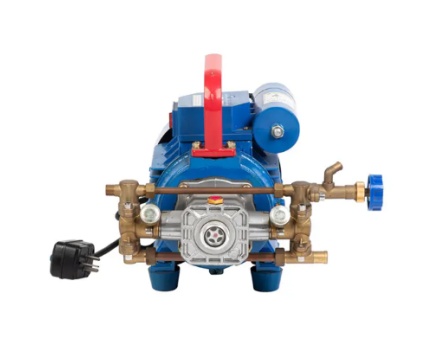
When buyers ask us what kind of Agricultural Sprayers they should choose, we usually start with one truth: the “best sprayer” is not about the biggest tank or the highest pressure on paper. It’s about how you move, where you spray, and how long you spray each day. In real farm work, terrain, crop structure, and operator comfort make a major difference. That’s why these four categories—Knapsack Power Sprayers, Portable Power Sprayers, Frame Power Sprayers, and Trolley Power Sprayers—cover most practical needs in orchards, farms, and mixed-use agricultural operations.
Below, we expand each type with clearer use scenarios, selection tips, and the kind of decision logic growers actually use on-site.
A Knapsack Power Sprayer is a backpack-type sprayer powered by a small engine or motorized unit. It’s built for maximum mobility, which is critical in orchards, uneven terrain, and narrow working spaces where wheeled equipment can’t easily go. Because it is worn on the operator’s back, it turns the sprayer into a “walking machine,” ideal for moving row-by-row without dragging hoses long distances or repositioning a heavy unit repeatedly.
Best applications
Orchards and fruit trees (walking between rows): You can move easily under canopies and treat specific trees or sections without disturbing branches or irrigation lines.
Hills, terraces, uneven ground: On sloped land, portability matters more than tank size. A backpack sprayer lets you keep balance and reach areas where wheels slip or struggle.
Greenhouse edges and spot treatment: It’s efficient for targeted pest control where you don’t want overspray across the whole area.
Farms requiring flexible movement: If you spray multiple small blocks in one day (different crops or zones), a knapsack unit reduces setup time.
Why people choose it
Hands-free carrying + strong spray output: Compared with manual knapsack sprayers, the powered design reduces fatigue and supports more consistent spraying.
Efficient for small to medium areas: Many growers don’t need a large system; they need the ability to finish daily spraying without downtime.
Great for rows, corners, and irregular spaces: It performs well where straight-line, large-scale sprayers simply can’t operate.
A Portable Power Sprayer is a compact, carryable unit designed to be moved by hand and placed near the spray zone. It is not worn like a backpack, which makes it a good choice for users who want power output but prefer not to carry the full load on the body. In many farms, portable power sprayers are used as a flexible “general-purpose” sprayer that can handle a variety of jobs as long as the operator can reposition the unit easily.
Best applications
Small farms and mixed-use spraying: Great when you work in multiple locations—vegetable plots, orchard edges, farmyard areas—without needing a fixed setup.
Around farm facilities, barns, and storage zones: Often used for sanitation, perimeter spraying, or pest control in utility areas.
Garden/landscape spraying with higher pressure demand: Useful when manual sprayers feel slow or inconsistent.
Point-to-point spraying: If you move to one zone, spray, then move again, a portable unit fits the workflow.
Why people choose it
Good balance of power and portability: It delivers stronger output than manual sprayers while remaining easy to transport.
Faster than manual spraying: In many daily tasks, speed and consistency are the difference between finishing on time or delaying work.
Flexible hose operation for different angles: Spraying under leaves, around trunks, or into corners becomes easier with a wand and hose setup.
A Frame Power Sprayer is built on a stable frame structure, often designed for longer operation time and better component protection. This type is chosen for higher workload and more continuous use.
Best applications
Longer spraying sessions in orchards: If you work through multiple rows in one continuous operation, stability helps maintain consistent output.
Operations needing consistent pressure and durability: Farms that spray weekly or seasonally at high frequency benefit from a robust setup.
Users who value professional workflow: Frame units are often chosen by users who want a more “set and operate” approach.
Why people choose it
Strong structure for frequent use: A sturdy frame protects the unit from bumps, drops, and uneven placement.
More stable placement during operation: Less vibration and less shifting means a more controlled spraying process.
Suitable for extended hose work: If you spray with longer hoses, stability becomes important—frame systems handle that better.
A Trolley Power Sprayer integrates the sprayer system onto a trolley/wheeled base. It’s ideal when your spray area is larger, and you want mobility without carrying weight.
Best applications
Large orchards and farms with long rows: You can move along rows without lifting the unit repeatedly.
Parks, plantations, and wide property spraying: Ideal for large-scale property management and mixed terrain where walking distance is long.
Spraying tasks requiring larger water/chemical capacity: Trolley systems often support longer work time with fewer refill interruptions.
Why people choose it
Easy to move across the ground: Wheels make transport more efficient, especially in larger sites.
Reduces operator fatigue: Less carrying = less exhaustion, especially in hot seasons.
Supports longer work time: With higher capacity and easier movement, the operator can complete more work per session.
Type | How it moves | Best for | Biggest advantage |
Knapsack Power Sprayers | Worn on the back | Orchards, slopes, tight rows | Maximum mobility |
Portable Power Sprayers | Hand-carry & place | Small farms, mixed tasks | Compact + flexible |
Frame Power Sprayers | Fixed frame unit | Frequent, longer spraying | Stable + durable |
Trolley Power Sprayers | Wheeled trolley | Larger areas, long rows | Less fatigue + longer runtime |
Use this simple decision logic:
If you spray in hilly terrain or narrow orchard rows → choose Knapsack Power Sprayers
If you need a lightweight, easy-to-carry sprayer for multiple areas → choose Portable Power Sprayers
If you spray often and need strong stability and long service life → choose Frame Power Sprayers
If you spray large areas and want mobility without carrying weight → choose Trolley Power Sprayers
So, what is a crop sprayer called? In most cases, it’s simply called an agricultural sprayer or power sprayer, and the exact wording depends on whether you’re spraying pests, weeds, or general crop protection. The more important step is choosing the right Agricultural Sprayers category for your work. If your options are Knapsack Power Sprayers, Portable Power Sprayers, Frame Power Sprayers, and Trolley Power Sprayers, you can quickly match them to your terrain and workload—and get better efficiency and more consistent application.
To learn more about Agricultural Sprayers and find the right configuration for your farm or orchard, you’re welcome to reach out to Taizhou Kesiwo Garden Tools Co., Ltd. for product details and selection support.
Most people call it an agricultural sprayer or power sprayer. The name changes depending on the job (weed, pest, orchard).
For tight rows and uneven ground, Knapsack Power Sprayers are usually the most practical.
Portable units focus on easy carrying, while Frame Power Sprayers focus more on stability, durability, and longer duty cycles.
Choose Trolley Power Sprayers when you spray larger areas and want to reduce fatigue while supporting longer working time.


