
Views: 0 Author: Site Editor Publish Time: 2026-08-27 Origin: Site


Managing overgrown vegetation often feels like a frustrating guessing game. Every property owner faces the ongoing challenge of efficiently clearing, pruning, and managing vegetation. However, buying the wrong tool leads to wasted money, extreme physical strain, and severe damage to your live plants. Choosing between heavy-duty equipment and precision tools requires careful consideration. This guide provides an objective, evidence-based comparison between chainsaws and power scissors, commonly known as electric pruning shears. We will evaluate these tools based on task volume, stem diameter, and user safety. You will learn exactly when to deploy each tool for maximum efficiency. Furthermore, we will introduce the concept of a holistic landscaping toolkit. You will discover how site preparation, precision pruning, and planting workflows connect seamlessly. Finally, we will show you how integrating complementary tools into your workflow ensures professional-grade results every time.
Capacity Dictates the Tool: Chainsaws are built for high-torque felling and bucking (branches 3+ inches); power scissors excel at rapid, repetitive precision cuts (under 2 inches).
Plant Health Prioritization: Power scissors deliver clean, crushing-free cuts that promote rapid cambium healing, making them superior for live tree maintenance.
Fatigue and Safety Realities: Chainsaws carry high kickback risks and require heavier PPE, whereas power scissors drastically reduce repetitive strain injury (RSI) but introduce finger-amputation risks if misused.
Workflow Synergy: Complete site management often requires a tiered approach—using a chainsaw for clearing, power scissors for detailing, and an earth auger for post-clearing planting or fencing.
Landscaping professionals and property owners must first identify their core operational bottlenecks. You need to differentiate between macro-level structural tree removal and micro-level canopy maintenance. Structural removal involves clearing large limbs, felling dead trees, and bucking logs. Canopy maintenance involves shaping fruit trees, managing vineyard growth, and detailing ornamental shrubs. Failing to distinguish between these two tasks leads to equipment misuse.
You can simplify this assessment by establishing a strict two-inch threshold rule. Industry standards dictate a clear dividing line based on branch diameter. Follow these evaluation steps:
Measure Average Stem Diameter: Walk your property and measure the thickest branches you plan to cut daily.
Apply the Two-Inch Rule: Anything consistently exceeding two inches in diameter requires a saw. Anything measuring under two inches demands a shear.
Assess Material Density: Soft, green wood cuts easily. Dead, hardened hardwood offers significant resistance and requires different blade profiles.
Next, you must balance workflow speed against output quality. Rapid brush clearing demands high-speed, aggressive cutting. However, botanical science requires clean, surgical cuts on live plants. Rough, splintered cuts leave trees vulnerable to fungal infections and disease vectors. Therefore, you must decide whether your primary goal is raw removal speed or long-term plant health.
The chainsaw remains the undisputed champion of heavy vegetation management. It delivers unparalleled torque and cutting speed. This tool thrives in demanding environments where raw power matters most. We rely on chainsaws for bucking felled trees, clearing dense woody overgrowth, and dropping hazardous limbs. When processing large timber, high cutting speed becomes your most valuable asset.
However, implementing a chainsaw workflow introduces significant realities and risks. You cannot simply pull the trigger and expect perfect results. Operators must maintain stringent equipment protocols. Regular chain tensioning, continuous bar oil monitoring, and precise sharpening dictate the tool's effectiveness. A dull chain forces the operator to push harder, increasing both danger and fatigue.
Physical toll represents another major factor. Chainsaws generate severe vibration and demand high physical strength to control. Prolonged exposure can lead to hand-arm vibration syndrome (HAVS), a serious occupational hazard. You must monitor exposure limits carefully. Additionally, chainsaws perform poorly on thin, flexible branches. The aggressive chain teeth tend to grab and tear bark rather than slice cleanly, severely damaging live plants.
You achieve success with a chainsaw when raw removal capacity outranks precision. Choose this tool when you need to process large timber quickly. It shines during storm cleanup, firewood processing, and lot clearing. If your primary goal involves reducing large physical mass into manageable pieces, the chainsaw stands alone.
Power scissors redefine orchard and landscape management. These electric pruning shears deliver instant, clean bypass cuts. They have become the industry standard for orchard management, viticulture, and detailed landscaping. Instead of tearing wood, the bypass mechanism slices cleanly through the cambium layer. This surgical precision promotes rapid healing and minimizes disease transmission.
The ergonomic benefits are staggering. Manual pruning shears require intense hand strength, often leading to repetitive strain injuries over time. Power scissors reduce operator fatigue to near zero. A worker can execute thousands of cuts in a single day without hand cramps. Furthermore, they offer significantly safer handling than mini-chainsaws when processing small branches. You maintain superior control because the tool does not generate unpredictable kickback.
Despite these advantages, power scissors carry strict implementation limits. You must respect the manufacturer's diameter restrictions. Forcing the tool onto overly thick branches guarantees catastrophic failure. You will either burn out the internal motor or snap the high-carbon steel blade. Maintenance also differs greatly from chainsaws. You must manage battery lifecycles carefully and hone the blades daily to ensure optimal performance.
Success criteria for power scissors focus heavily on plant health and task volume. Choose this tool when you face hundreds of repetitive cuts daily. If the branch diameter remains small and plant healing is your primary metric, power scissors provide the highest return on investment.
Comparing these tools requires a structured look at specific features and their real-world outcomes. We evaluate them across critical operational metrics to help you align equipment capabilities with project demands.
Cut quality directly impacts disease prevention. A chainsaw operates via a tearing action. It rips wood fibers apart, which works perfectly for deadwood. However, on small live limbs, this tearing causes severe splintering. Splintered wood invites pests and pathogens. Conversely, a power scissor acts like a surgical scalpel. It creates a smooth, disease-resistant bypass cut. Trees heal rapidly, sealing off the wound from environmental threats.
Labor efficiency also diverges sharply. Chainsaw operation demands high physical exertion. An operator can safely run a heavy gas or electric chainsaw for only a few hours before fatigue degrades productivity and safety. Power scissors require minimal physical effort. Workers can maintain a high-speed pruning pace for an entire eight-hour shift without significant productivity drops.
Safety and compliance protocols vary significantly between the two. Chainsaw operators must wear comprehensive Personal Protective Equipment (PPE). This includes cut-resistant chaps, face shields, hearing protection, and anti-vibration gloves. Power scissors require far less burdensome gear. Operators typically need only safety glasses and cut-resistant gloves. However, power scissors demand strict trigger discipline, as the powerful blades can cause severe injury if fingers slip into the cutting zone.
Table 1: Feature Comparison and Project Outcomes
Evaluation Metric | Chainsaw | Power Scissor |
|---|---|---|
Optimal Cut Diameter | 3 inches and above | Under 2 inches |
Cut Quality (Live Plants) | Poor (Tearing/Splintering) | Excellent (Clean bypass cut) |
Fatigue Rate | High (Heavy vibration, weight) | Low (Ergonomic, trigger-operated) |
Safety Risk Profile | Kickback, heavy lacerations | Finger pinch/amputation if misused |
Required PPE | Chaps, shield, ear protection, gloves | Safety glasses, cut-resistant gloves |
Professional site preparation rarely relies on a single tool. Understanding the site preparation pipeline reveals how these tools fit into a complete project lifecycle. You achieve maximum efficiency by deploying specialized equipment at exact stages of your workflow.
Phase one involves heavy clearing. You enter a neglected site and encounter deadwood, thick invasive saplings, and heavy structural obstructions. Here, you deploy the chainsaw. You buck fallen logs, fell unwanted shade trees, and reduce large canopy masses. The chainsaw quickly transforms an impenetrable thicket into an accessible workspace.
Phase two focuses on detailing and shaping. Once you remove the heavy debris, you must manage the remaining live plants. You switch to the power scissor to shape fruit trees, clear small brush, and prune ornamental shrubs. The power scissor maneuvers easily through tight canopies, ensuring the plants you leave behind remain healthy and structurally sound.
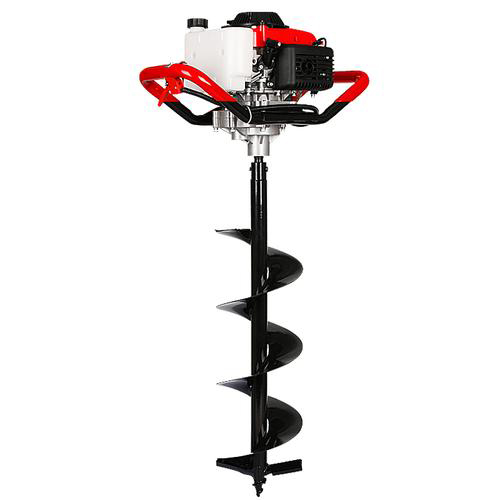
Phase three transitions from removal to installation. After clearing and detailing the site, you often need to install new infrastructure. This is where you deploy an Earth Auger to bore precise holes. Whether you are planting new saplings to replace dead trees, building retaining walls, or setting fence posts around your freshly cleared area, manual digging proves too slow. The auger delivers rapid, uniform holes in compacted soil.
Understanding tool synergy prevents expensive equipment abuse. Many novices try to clear roots around a stump using a chainsaw. Driving a spinning chainsaw chain into the dirt ruins the chain instantly. Instead, a well-planned workflow utilizes an Earth Auger to drill around root balls or set adjacent posts safely. Similarly, using power scissors to cut thick, dead roots often snaps the blade. Investing in the right tool for the specific phase guarantees faster results and protects your equipment from catastrophic failure.
Making a final purchasing decision requires an honest audit of your daily tasks. Avoid the temptation to buy a larger tool simply because it looks more capable. Instead, match the equipment to your most frequent operational bottleneck.
You should buy a chainsaw if your primary tasks involve processing large volumes of thick wood. If you regularly handle storm cleanup, process firewood for winter, or manage mature trees, a chainsaw is mandatory. It is the only reliable choice when limb diameters consistently exceed three inches. A chainsaw serves as your primary heavy-clearing asset.
You should buy a power scissor if you manage fruit trees, rose bushes, or vineyards. If your daily routine involves making hundreds of sub-2-inch cuts, power scissors will revolutionize your workflow. They save time, eliminate hand pain, and protect the botanical health of your high-value plants.
Take immediate action by auditing your property today. Walk outside and measure the average branch thickness of the vegetation you need to manage. This quick survey provides undeniable data for your purchase. If you lean toward battery-powered options, strongly consider buying into a unified brand ecosystem. Many commercial brands allow their chainsaws, power scissors, and earth augers to share the exact same lithium-ion battery platform. Sharing batteries across your entire landscaping toolkit maximizes your budget and ensures you always have power ready for the next phase of your project.
Tools are never truly interchangeable; they function as highly specialized solutions for different stages of landscaping. A successful property management strategy relies on understanding these distinct capabilities. Forcing a chainsaw to perform a power scissor's job guarantees poor plant health and rough, splintered cuts. Conversely, forcing a power scissor to tackle heavy, three-inch branches guarantees broken equipment and frustrating delays. You must assess your current project scope accurately. Determine whether you are focusing on heavy clearing, precision pruning, or post-clearing planting. Once you identify your immediate bottleneck, invest confidently in the tool built specifically to solve it.
A: No. While mini-chainsaws cut small branches quickly, they cause significant tearing and splintering on live bark. Power scissors provide clean, surgical bypass cuts essential for plant healing. Additionally, mini-chainsaws pose a higher risk of unpredictable kickback when snagging flexible twigs.
A: Most commercial electric power scissors are engineered to handle branches between 1.2 to 1.7 inches in diameter. Pushing them beyond this limit risks burning out the internal motor or snapping the steel cutting blades.
A: If your only goal is brush removal, you do not need one. However, most clearing projects are followed by planting saplings or installing fencing. An auger is strictly for post-clearing installation, preventing you from ruining other tools by digging in the dirt.
A: Chainsaws require constant chain tensioning, continuous bar oil lubrication, and frequent tooth sharpening. Power scissors demand less daily mechanical adjustment, requiring only basic daily blade honing, hinge lubrication, and careful battery lifecycle management.


