
Views: 0 Author: Site Editor Publish Time: 2026-09-19 Origin: Site


Is breaking hard soil leaving you with an aching back at the end of the day? Whether you are managing a cozy backyard garden or a sprawling commercial farm, breaking ground is undeniably grueling labor without the right equipment. Every farmer and landscaper needs a reliable cultivator to prepare their seedbeds efficiently.
While most buyers know they need a motorized machine, the biggest hurdle often arises at the purchasing stage. Choosing the optimal engine type is a critical engineering decision. Gasoline and diesel engines perform vastly differently under stress. Selecting the wrong power plant can lead to frustrating stalls, premature equipment failure, or unnecessary physical fatigue. In this comprehensive guide, we will break down the gasoline vs diesel tiller debate. We will explore facts about power delivery, maintenance, and real-world scenarios to help you make a smart, long-lasting investment for your land.
When investing in agricultural equipment, understanding the core mechanics of the machine ensures you make a data-driven decision. The mini tiller is a foundational tool for soil preparation. Yet, its effectiveness is entirely dependent on the power plant driving it.
A mini tiller is a compact, motorized agricultural machine designed to cultivate soil. It consists of a set of rotary tines, a transmission system, steering handles, and an internal combustion engine. Picture trying to mix compost into a raised bed by hand. A mini tiller turns hours of back-breaking manual labor into a ten-minute stroll. By churning the top layer of the earth, it creates a loose, fine seedbed that promotes optimal root growth, aerates the soil, and efficiently uproots weeds.
While the quality of the forged tines and the ruggedness of the gearbox are undeniably important, the engine remains the beating heart of the machine. The engine dictates the torque output, the maximum digging depth, and how the machine handles tough, rocky terrain. A tiller with an underpowered engine will aggressively stall when it hits hidden roots or hard clay. Conversely, a machine with excessive power for a small greenhouse may be too heavy and difficult to control. Therefore, the core debate in selecting the right equipment always comes down to the engine type.
A gasoline tiller utilizes a spark-ignition internal combustion engine. These machines are widely popular among residential users, hobby farmers, and landscapers who require a practical balance of power and portability.
Gasoline engines operate using a spark plug to ignite a compressed mixture of air and highly volatile fuel. Because gasoline burns rapidly, these power plants are engineered to run at higher Revolutions Per Minute, commonly referred to as RPM. This high RPM translates to rapid tine rotation. Fast-spinning blades are excellent for pulverizing soft soil and aggressive surface weeding. Furthermore, the engine block is typically constructed from lightweight aluminum alloys, significantly reducing the overall mass of the machine. For instance, a standard gasoline power mini tiller often features a 7HP engine displacing around 212cc, keeping the total machine weight manageable for a single operator.
A diesel tiller is powered by a compression-ignition engine. These are heavy-duty machines built for rigorous agricultural tasks, commercial farming, and challenging soil conditions that would quickly overwhelm lighter equipment.
Unlike gas engines, a diesel engine lacks a spark plug. Instead, it draws air into the cylinder and compresses it to an extreme pressure, generating intense heat. When diesel fuel is injected into this superheated air, it spontaneously combusts. This high-compression process requires a heavily reinforced, cast-iron engine block. The result is an engine that operates at lower RPMs but delivers massive rotational force directly to the tines. A robust diesel power tiller might utilize a 9HP 186F engine paired with a direct gear transmission, ensuring zero power loss when digging deep into uncultivated earth.
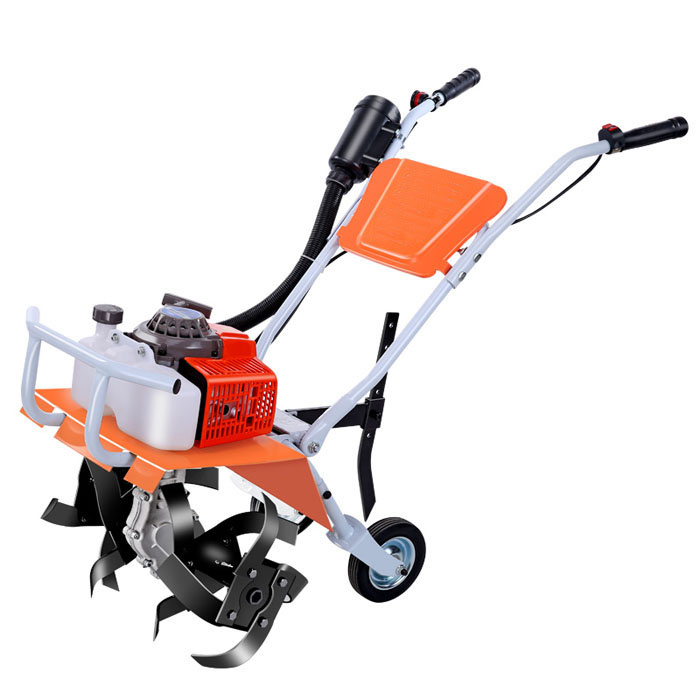
To make an informed purchasing decision, it is essential to compare these two platforms across specific, real-world operational metrics. The mechanical differences dictate how the machine interacts with the soil and how much it costs to operate over a decade.
The fundamental difference in power delivery dictates how each machine performs in the dirt. A gasoline tiller relies on high RPM. The fast-spinning tines are highly effective at chopping up surface weeds, turning over loose topsoil, and creating a fine, powdery seedbed. However, high RPM does not equate to digging power.
In contrast, a diesel tiller relies on torque. Torque is the twisting force that allows the machine to dig deep into the earth. If you are breaking ground on a plot of land that has never been farmed, the torque of a diesel engine will forcefully pull the tines through the resistance. In a direct head-to-head scenario, diesel wins for deep plowing, while gas wins for rapid surface cultivation.
When calculating the total cost of ownership, fuel consumption is a major factor. From a thermodynamic standpoint, diesel engines are inherently more efficient. In practical terms, if you operate a tiller for 8 hours a day during planting season, a gasoline model will require more frequent refueling stops. Over a five-year period, the substantial savings in fuel costs achieved by a diesel tiller can often entirely offset its higher initial purchase price.
Operator fatigue is a vital safety and productivity concern. Gasoline tillers are significantly lighter. A lighter machine is easier to load into the back of a pickup truck, easier to pivot at the end of a garden row, and less likely to sink into muddy conditions. This makes gas models ideal for older operators or those working in confined spaces.
Diesel tillers are undeniably heavy. While this weight makes them harder to wrestle around tight corners, it is actually a massive advantage during the tilling process. The heavy engine presses the tines down into the soil naturally, preventing the machine from skipping or bouncing over hard ground. You do not have to push down on the handles; you simply guide the machine.
Both machines require routine maintenance, but the procedures differ drastically. Gasoline engines require regular spark plug replacements, carburetor cleaning, and seasonal tuning.
Diesel engines do not have carburetors or spark plugs, eliminating those specific failure points. However, they require strict adherence to fuel filter changes and oil maintenance. If a diesel fuel injector becomes clogged with debris, the repair is more complex and expensive than cleaning a gas carburetor. Overall, while diesel repairs are costlier, the intervals between major servicing are usually much longer, resulting in a superior total lifespan.
Gasoline units offer a low upfront cost, translating to a high return on investment for seasonal users, homeowners, and small-scale gardeners who only use the machine a few weekends a year. Conversely, diesel units demand a high upfront cost but deliver an exceptional return for commercial farmers, rental equipment fleets, and large landowners who use the machine weekly and rely on its extreme durability.
| Feature / Metric | Gasoline Mini Tiller | Diesel Mini Tiller |
|---|---|---|
| Engine Ignition | Spark-ignition | Compression-ignition |
| Torque / Pulling Power | Moderate | Very High |
| Fuel Efficiency | Lower | Higher |
| Machine Weight | Lightweight | Heavy |
| Best Soil Type | Loam, Sand, Soft Topsoil | Clay, Hardpan, Virgin Ground |
| Engine Lifespan | 5 to 10 Years | 10 to 15+ Years |
Analyzing recent market data and agricultural search trends reveals a distinct shift in equipment preferences globally. Historically, small-scale farmers and residential users defaulted almost exclusively to gasoline models due to sheer accessibility and lower initial costs. However, current industry analysis shows a surging demand for compact diesel models among medium-scale homesteaders.
Specifically, this shift is driven by fluctuating global fuel costs and a growing awareness of total cost of ownership. Operators are increasingly drawn toward the long-term thermal efficiency of compression-ignition engines. On the other side of the spectrum, the gasoline segment is experiencing rapid innovations. Manufacturers are introducing advanced vibration-reduction technology and cleaner-burning carburetors to meet increasingly strict environmental emissions standards. Ultimately, the market is bifurcating. Casual residential users prioritize ultra-lightweight, ergonomic gas models for comfort. Meanwhile, serious agricultural practitioners invest heavily in the rugged longevity of diesel platforms, viewing them as generational assets rather than disposable tools.
Data and specifications are only useful when applied to real-world scenarios. Here is a practical, engineer-approved guide to help you match the machine to the unique demands of your land.
Recommendation: Gasoline Tiller
If you are managing a backyard vegetable garden, raised beds, or a small suburban plot under half an acre, a gasoline model is the most logical choice. The lightweight nature of the machine ensures you will not excessively compact the soil in your existing beds. The agility allows you to gracefully maneuver around fences, delicate plants, and narrow pathways. Furthermore, the lower upfront cost makes perfect financial sense for equipment that may only be used during the spring planting and fall cleanup seasons.
Recommendation: Diesel Tiller
For properties exceeding an acre, or lands characterized by dense clay and rocky soil, diesel remains the undisputed standard. Large agricultural plots require hours of continuous operation. The fuel efficiency of a diesel engine minimizes downtime, while the heavy block weight forces the tines deep into the earth without requiring the operator to manually push the machine down. The low-end torque will churn through thick orchard roots and hardpan efficiently, saving both time and engine wear.
Recommendation: Diesel Tiller
Professionals who rely on their equipment for daily income demand maximum durability. Commercial landscapers and equipment rental businesses subject their machines to constant abuse, varying soil types, and different, often inexperienced, operators. The robust cast-iron construction and lack of delicate carburetors make diesel models the most reliable choice for continuous, heavy-duty commercial applications where downtime equals lost revenue.
Regardless of whether you choose a gasoline or diesel model, proactive maintenance is the only proven method to prevent catastrophic mechanical failure. Proper care ensures your machine reaches its maximum operational lifespan.
The debate surrounding these two power plants is not about which machine is objectively superior. Rather, it is about which machine is the correct tool for your specific environment.
If you manage a small to medium garden with relatively soft, previously worked soil, a gasoline tiller provides the agility, affordability, and ease of use required for seasonal tasks. Conversely, if you are breaking hard clay, managing a large farm, or operating a commercial landscaping business, the unmatched torque, fuel efficiency, and extreme durability of a diesel tiller make it the only logical investment.
Take the time to assess your acreage, test your soil compaction, and review your long-term budget. By perfectly matching the engine characteristics to your land demands, you will ensure a highly productive, efficient, and successful planting season year after year. Ready to upgrade your agricultural fleet? Explore the full range of high-performance equipment at Agro-Tools to find the exact match for your farming needs.
Gasoline tillers are empirically easier to start, particularly in cold weather environments. Their spark-ignition systems require significantly less physical force on the recoil pull-cord. Diesel engines rely on high cylinder compression to generate the heat necessary to ignite the fuel, which creates substantial physical resistance when pulling the starter cord. While many modern diesel tillers feature decompression valves to assist with manual starting, a standard gas engine remains less physically demanding to initiate.
Yes, a gasoline tiller can process clay soil, but it requires a strategic, patient approach. Because gas models are lighter and possess less low-end torque, they tend to bounce off heavily compacted hardpan initially. To successfully till clay with a gasoline machine, operators must make multiple shallow passes, gradually lowering the depth bar with each consecutive run. If your property consists primarily of dense, uncultivated clay, a heavier diesel machine is strongly recommended.
The economic viability of a diesel tiller depends entirely on your usage volume. If you operate the machine for commercial landscaping, manage a property larger than one acre, or face extremely compacted soil, the diesel unit is highly cost-effective. The break-even point is achieved through superior fuel efficiency and extended engine longevity. For high-volume users, the time saved and the reduced need for engine replacements make the higher initial capital investment absolutely worthwhile.
The lifespan of agricultural machinery is measured in operational hours rather than calendar years. With strict adherence to maintenance schedules, a high-quality gasoline engine can effectively operate for 1,000 to 1,500 hours before requiring a major rebuild. Conversely, a well-maintained diesel engine, due to its robust cast-iron construction and lower operating RPMs, can easily exceed 3,000 to 5,000 operational hours. For the average residential user, both machines can last for decades provided they are stored properly.
Gasoline tillers generally require more frequent carburetor adjustments at high altitudes because the thinner air creates a rich fuel mixture, leading to sluggish performance. Diesel engines, particularly those with forced induction or advanced fuel injection, tend to handle altitude changes better due to their compression-ignition nature. However, naturally aspirated diesels will also lose some horsepower at elevation. For high-altitude operation, consult the manufacturer for specific jetting or injection timing adjustments.
No, converting a gasoline tiller to run on diesel is not practically or economically feasible. The two engines operate on fundamentally different thermodynamic cycles. A diesel engine requires a heavily reinforced engine block to handle extreme compression ratios, specialized high-pressure fuel injectors, and completely different transmission gearing to accommodate lower RPMs. If your operational needs have evolved to require diesel power, it is always safer and more cost-effective to purchase a dedicated diesel machine.


