
Views: 0 Author: Site Editor Publish Time: 2026-09-24 Origin: Site


Without reliable irrigation, crops wither and livestock suffer. Farmers face a tough choice when selecting off-grid power sources. Working in remote pastures far from the electrical grid makes this decision critical. We will break down mechanical differences, long-term costs, and specific applications. Are you pulling water from a shallow creek? Or maybe a deep retention pond? Selecting the right water pumps directly impacts your harvest yield and operational efficiency.
Modern agriculture is experiencing a significant shift in infrastructure planning. Climate unpredictability demands more resilient irrigation systems. Recent market data shows a clear trend: commercial farms are moving away from underpowered or grid-dependent setups in remote fields. Instead, they are investing heavily in high-torque internal combustion engines. Extreme weather requires moving massive volumes of water rapidly. Whether battling sudden spring floods or prolonged summer droughts, off-grid reliability is no longer a luxury. It is a strict baseline requirement for survival.
Portability vs. Cost: Spark-ignition models are light and cost less upfront. They are perfect for quick transfer jobs across muddy terrain.
Endurance vs. Efficiency: Compression-ignition units deliver superior fuel economy and massive torque. They are the engineering standard for continuous, large-scale irrigation.
Application Matching: Your choice depends on specific acreage, daily operating hours, and the required flow rate of your sprinkler or drip systems.
Long-Term ROI: Heavy-duty engines cost more initially. However, their reduced fuel consumption and extended service intervals yield higher returns for commercial operations.
Moving massive volumes of water efficiently is non-negotiable in farming. You might be drawing from a deep agricultural well or a murky retention pond. Either way, your equipment must survive punishing outdoor conditions. Engine-driven units provide the mechanical force needed to transport water across vast distances. They operate completely independent of the local power grid.
Electric models run quietly and need little maintenance. Yet, they create logistical nightmares in large fields. Stringing extension cords through wet mud is a severe safety hazard. It also causes voltage drops that fry electric motors. Furthermore, battery-powered units simply lack the sustained flow rates for commercial irrigation.
Fuel-driven equipment solves these mobility issues instantly. You can mount a unit on a truck bed and deploy it anywhere on the property. Internal combustion engines deliver the raw horsepower needed for heavy-duty tasks. They excel at flood irrigation and pushing water up steep inclines.
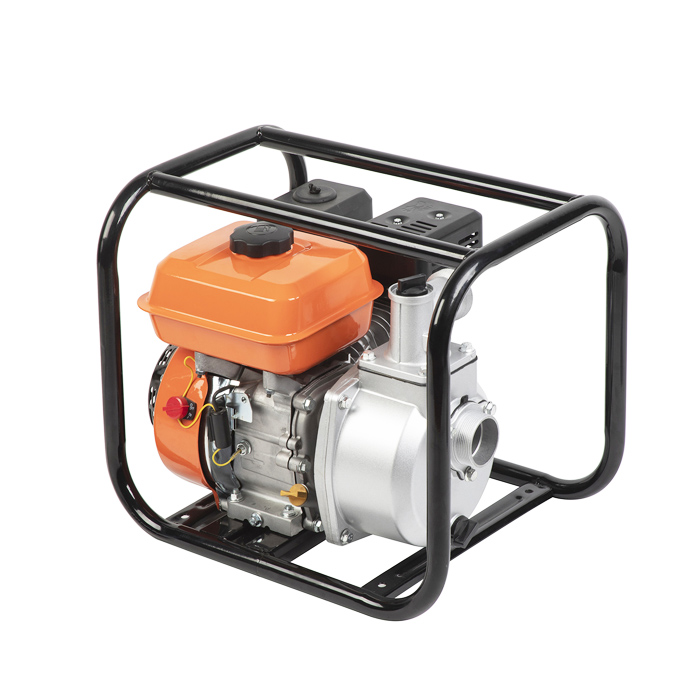
A gasoline water pump uses a spark-ignition engine to drive its impeller. In farming, these are typically 4-stroke Overhead Valve engines. They balance reliable power with straightforward operation. Standard 2-inch and 3-inch models often feature lightweight aluminum pump bodies. This specific design prioritizes operator mobility.
Lower Initial Cost: Manufacturing spark-ignition engines requires less heavy metal. This lowers the purchase price. They are highly accessible for small-scale growers or as emergency backup units.
Exceptional Portability: Structural components are light. A single farmhand can carry a typical 3-inch model directly to a drainage ditch. You do not need heavy machinery to move it.
Cold Weather Starting: The fuel is highly volatile and ignites easily with a spark. Pull the recoil cord on a freezing morning, and the engine usually starts right up.
Flexible RPM Range: These motors quickly spool up to 3,600 RPM. This provides flexible pressure adjustments for washing down muddy tractors or standard crop watering.
Shorter Lifespan: High-speed operation generates intense heat. Continuous friction wears out internal components faster under heavy daily use.
Higher Fuel Costs: The fuel has lower energy density. Under heavy load, the engine consumes it rapidly. This spikes operating costs during peak drought seasons.
Engineering Specification | Spark-Ignition (Gas) | Compression-Ignition (Diesel) |
|---|---|---|
Operating Speed | High (Approx. 3,600 RPM) | Low (1,500 - 2,500 RPM) |
Torque Delivery | Moderate, relies on high speed | Massive low-end grunt |
Thermal Efficiency | Lower (Higher fuel consumption) | Superior (15% more energy dense) |
Expected Lifespan | 1,500 to 2,500 hours | 5,000 to 10,000+ hours |
Ideal Application | Intermittent use, high mobility | Continuous, heavy-duty irrigation |
A diesel water pump relies on compression ignition. There are no spark plugs. The engine compresses air to extreme pressures, causing injected fuel to ignite spontaneously. To contain this pressure, engineers cast the engine blocks from heavy-duty iron. Take a standard 4-inch heavy-duty model for example. It can easily push massive volumes of water with unmatched mechanical stability.
Superior Fuel Efficiency: The fuel is roughly 15 percent more energy-dense. The engine performs significantly more work per gallon. This drastically lowers long-term operational expenses.
Massive Torque Output: They generate maximum torque at lower speeds. This low-end grunt is essential. It moves thick, muddy agricultural slurry over long distances without stalling the impeller.
Extreme Durability: Built to handle intense internal compression, these engines are masters of endurance. They run continuously for 12 hours under the blazing sun without overheating.
Lower Fire Risk: The fuel is less volatile. In dusty environments filled with dry hay and chaff, this inherently mitigates flash fire risks.
Higher Upfront Investment: Heavy cast-iron blocks and complex fuel injection systems make them more expensive to purchase initially.
Weight and Mobility: Durability comes at the cost of portability. Moving these units requires a wheeled cart, a skid steer, or a tractor with front forks.
When evaluating irrigation equipment, you must look beyond the sticker price. True value is determined by performance under severe load, operational lifespan, and the ongoing drain of fuel and maintenance.
Creeping operating costs quickly consume profit margins in commercial farming. Compression-ignition engines win the long game here. Their high compression ratio translates directly to superior thermal efficiency. When moving the exact same volume of water, the heavy-duty engine consumes significantly less fuel per hour. For an operation running 10 hours a day, fuel savings usually offset the higher purchase price within two growing seasons.
Agricultural water is rarely perfectly clear. It rarely flows over flat terrain. You frequently push water up steep inclines or move thick runoff. This requires raw, unyielding torque. Heavy-duty engines produce massive torque at low RPMs. If the intake sucks up a thick gulp of pond sludge, the engine maintains rotational force. It does not stall. Conversely, lighter engines rely on high RPMs. Under sudden heavy loads, they bog down. The operator must throttle up aggressively. This spikes heat and degrades internal mechanical seals.
Maintenance realities differ drastically. Lighter engines demand regular attention. You must replace fouled spark plugs and clean varnished carburetors. Friction heat at 3,600 RPM accelerates wear. In contrast, heavy-duty engines lack carburetors and spark plugs entirely. This simplifies the electrical side. Routine care means changing heavy-duty oil and keeping air filters clean. Maintain the filters, and this engine will easily outlast its counterpart by thousands of hours.
Understanding specific mechanical strengths helps you deploy equipment effectively on your land.
For operations under 10 acres, a lighter unit is the logical choice. Market gardens and hobby farms do not require dawn-to-dusk pumping. A standard lightweight model provides ample flow to pressurize drip lines in a greenhouse or fill overhead tanks. Furthermore, they excel in emergency response. When a torrential spring storm floods a pasture, rapid deployment saves crop root systems. Toss it in a cart, drive to the ditch, and start draining immediately.
When operations expand into hundreds of acres, equipment must scale. Heavy-duty machines are the undisputed workhorses of commercial agriculture. Cultivating vast stretches of corn or soybeans demands staggering water volumes. These robust units power massive center-pivot systems and extensive flood networks. They require immense pressure to push water through hundreds of yards of piping. The steady, low-end torque ensures constant pressure at the furthest edge of the field. In arid regions, pumps run non-stop. A lighter engine would warp its piston rings under this stress. Heavy-duty liquid-cooled engines settle into a low-RPM rhythm, operating optimally all day.
Selecting the appropriate equipment requires analyzing your land's specific topography. Avoid the costly mistake of under-powering your system. Here is a direct engineering checklist for your selection.
The physics of moving water dictates your choice. First, measure the Suction Head. This is the vertical distance from the water surface to the pump. Standard surface centrifugal pumps cannot draw water from deeper than 25 vertical feet due to atmospheric pressure limits. Next, calculate Total Head Lift. Add the total vertical distance the water travels to the friction loss inside your hoses. Hilly terrain demands a high-torque engine to overcome gravity without dropping RPMs.
Your machine must match your irrigation network's consumption rate. Calculate the total output of all emitters and sprinklers running simultaneously. If your field demands 300 Gallons Per Minute, buying an undersized unit leaves crops dry at the end of the line. Always check the manufacturer's pump curve chart. Verify the engine delivers the required volume at your specific elevation.
Agricultural water is rarely pristine. A standard clear-water centrifugal pump works for filtered wells. However, drawing from a muddy pond or manure lagoon requires a specialized heavy-duty agricultural water pump. Trash variants feature deeper impeller veins and easy-open volutes to pass solid debris. For heavy sludge, compression-ignition torque is mandatory to prevent stalling.
Balance your capital budget against operational expenses. Are you pumping less than 100 hours a year? The lower upfront cost of a spark-ignition model makes financial sense. Are you running equipment for over 500 hours a season? Pay the initial premium for heavy-duty iron. You will quickly recoup the cost through lower daily fuel bills and zero downtime during the critical harvest window.
Choosing the right equipment depends entirely on your daily operational demands. A lighter unit offers fantastic portability. It is the perfect companion for quick watering tasks and emergency drainage. Conversely, heavy-duty models provide unmatched endurance and long-term fuel efficiency. They are the definitive choice for continuous commercial irrigation where failure is simply not an option.
Are you ready to upgrade your farm's infrastructure? Stop losing money on inefficient water transfer. Evaluate your daily usage, elevation changes, and water quality, then make the smart investment. Explore our complete range of professional-grade agricultural pumping equipment to find the exact match for your field's requirements. Ensure your harvest stays protected season after season.
While mechanically possible, engineers highly discourage it. These engines run at high RPMs and generate significant heat. Running them continuously for 12 hours degrades oil rapidly and wears out piston rings. They are best suited for 2 to 4-hour intervals to ensure a healthy lifespan.
Routine maintenance is actually more streamlined. There are no spark plugs, ignition coils, or carburetors to foul. Daily care involves checking oil and clearing air filters. However, repairing a high-pressure fuel injection system does require specialized mechanical knowledge if a major breakdown occurs.
Both engine types offer trash pump variants with large impellers. Specifically, for thick mud or dense livestock waste, a heavy-duty compression-ignition trash pump is vastly superior. The high torque keeps the impeller turning forcefully through dense sludge that would easily stall a lighter engine.
The longevity difference is massive. A standard spark-ignition engine typically lasts 1,500 to 2,500 hours before needing a rebuild. A well-maintained, liquid-cooled compression-ignition engine easily operates for 5,000 to over 10,000 hours. The cast-iron construction and lower RPMs drastically reduce thermal fatigue.
For a 5-acre plot, a standard 2-inch or 3-inch high-RPM pump is usually sufficient, provided your terrain is relatively flat. This size easily delivers 150 to 250 Gallons Per Minute. That is perfect for powering drip irrigation networks or filling transfer tanks without overcapitalizing on equipment.
Absolutely. As you push water up a hill, gravity and pipe friction create resistance, known as total head. The higher the elevation, the lower the actual flow rate delivered at the nozzle. Always consult the specific pump curve chart to ensure the engine has enough torque to meet your requirements at your specific field elevation.


