
Views: 0 Author: Site Editor Publish Time: 2026-08-31 Origin: Site


Modern tea plantations face a critical operational challenge today. Farm managers must constantly balance the rising expense and severe scarcity of skilled manual labor against the strict quality demands of premium tea production. Relying solely on traditional hand-plucking often limits a farm's ability to scale operations effectively. It restricts revenue growth during peak seasons. We view mechanization not as a compromise on quality, but as a standardized, scalable solution. It empowers agricultural teams to meet peak harvest windows reliably. Mechanized tools provide a necessary technological bridge. This guide will break down the operational mechanics, objective efficiency metrics, and implementation realities of upgrading to a Single Blade Tea Picking Machine. You will learn how modern equipment transforms yield consistency while preserving crucial leaf integrity. We also explore equipment selection criteria and operator training frameworks necessary for sustained success.
Operational Output: Mechanized picking can increase harvesting volume by 3x to 5x per operator compared to manual hand-plucking, directly reducing per-kilo labor costs.
Quality Control: When properly calibrated, modern single-blade models maintain the integrity of the "two leaves and a bud" standard, minimizing stem damage and broken leaves.
Ergonomics & TCO: Transitioning to battery-operated machinery reduces worker fatigue and offers a predictable Total Cost of Ownership (TCO) through lower maintenance overhead.
Implementation: Successful adoption requires structured operator training and terrain evaluation, not just equipment procurement.
Seasonal labor shortages heavily impact plantation profit margins worldwide. Minimum wage requirements continue rising across major agricultural sectors. Farms consistently struggle to hire enough skilled workers during peak picking seasons. The older generation of skilled pluckers is retiring. Younger workers often seek employment in urban centers instead. This acute labor scarcity forces managers to delay vital harvesting schedules.
Missed harvest windows present a severe financial risk to your business. Tea bushes grow rapidly during the optimal-flush periods. First and second flush teas require precise timing to capture their complex flavor profiles. Slow manual plucking means operators inevitably miss these narrow windows. Bushes continue growing past their prime state. Overgrown yields automatically downgrade the final product value. You lose premium pricing when leaves mature past the ideal stage.
Manual fatigue also ruins leaf consistency during long shifts. Hand-plucking accuracy drops significantly as the workday progresses. Tired workers inadvertently break stems or mix older, tougher leaves into the collection basket. They lose the precision required for high-grade sorting. This human inconsistency severely complicates final sorting and grading processes. Plantations urgently need a scalable method to standardize output. Without standardized output, predicting seasonal revenue becomes nearly impossible.
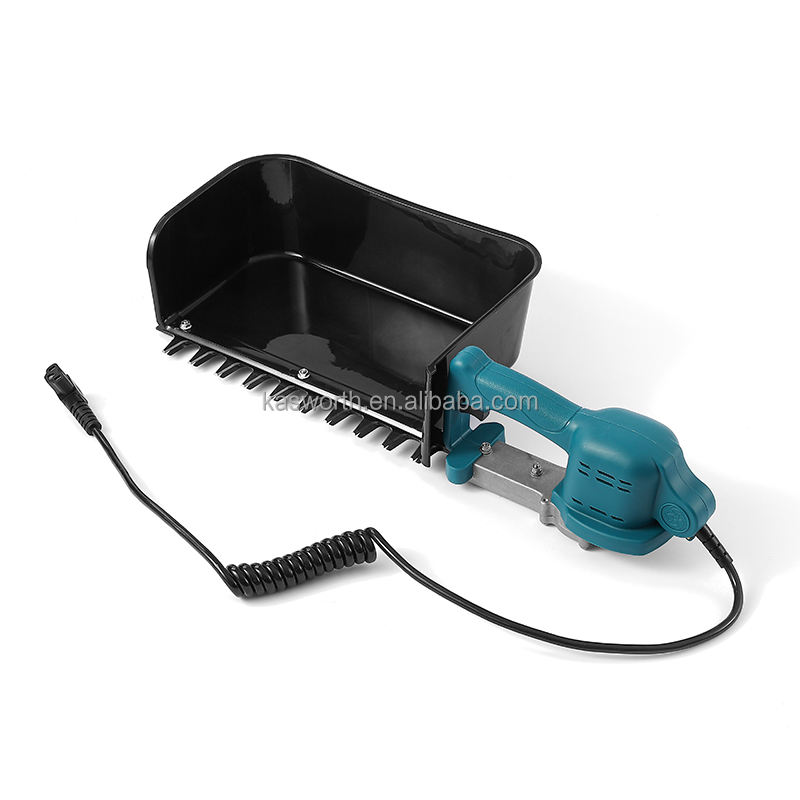
A Single Blade Tea Picking Machine relies on a highly precise cutting mechanism. It features a fast-reciprocating blade gliding directly against a fixed metallic comb. This specific design ensures clean, sheer cuts across the canopy. The physics entirely prevent tearing, pulling, or bruising the delicate plant stems. The mechanism mimics the exact severing action of sharp scissors. It slices through the stem cleanly without compressing the surrounding plant tissue.
Many farm owners initially consider heavy two-person or ride-on machines. Heavy machinery often damages delicate specialty crops due to their sheer weight. Wide tractors compress the soil and require extensive row spacing. Single-blade designs offer a lightweight, precision-focused alternative for careful operators. They maneuver easily around sloped terrain or tightly planted rows. They serve as the ideal bridge for high-quality specialty tea farms requiring extreme precision. You get significantly increased volume alongside meticulous height control.
Power sources have evolved dramatically over the last decade. Older gasoline engines were loud, heavy, and notoriously unreliable. They produced toxic exhaust emissions directly near the valuable crop. They also leaked oil and fuel onto the pristine leaves. Modern machines utilize battery-operated brushless motors instead. They eliminate carbon emissions entirely during the harvest. The electric motors operate quietly, improving workplace communication. Reduced vibration means operators work comfortably for much longer periods. They experience less physical strain on their hands and arms.
Volume and speed metrics clearly favor modern mechanization. A properly trained operator can harvest 15 to 20 kilograms per hour. This massive boost transforms daily yield projections. We must look at continuous operational uptime rather than just raw speed. Machines do not slow down during demanding afternoon shifts. They maintain the exact same cutting velocity at 4 PM as they do at 8 AM.
We must directly address the widespread quality myth in our industry. Academic evaluations and hard-core tea circles often assume machines inherently ruin tea. This deep skepticism stems from older, blunt-force harvesting methods. Early agricultural tractors mangled leaves and crushed vital stems. Modern equipment operates differently when calibrated correctly. Technological advancements have completely redefined mechanical precision.
Leaf integrity data shows surprising, positive results. A well-maintained Single Blade Tea Picking Machine preserves the microscopic cellular structure of the leaf. Clean, sharp cuts prevent premature oxidation before processing begins. They maintain an excellent intact-leaf percentage suitable for premium sorting. The final brewed cup retains its intended aromatic profile. This pristine output suits both mass commercial and premium specialty grades perfectly.
Plant health actually improves over time following mechanical intervention. Clean mechanical cuts promote healthier, uniform regrowth across the entire bush. Hand-plucking often leaves jagged, uneven stems behind. Human fingernails can crush the stem rather than slicing it. Uneven stems invite fungal disease and slow down the next flush significantly. Precision blades ensure your bushes recover vigorously.
Harvesting Method | Average Output (kg/hr) | Consistency Level | Fatigue Factor |
|---|---|---|---|
Manual Hand-Plucking | 3 - 5 | High initially, drops late shift | Very High |
Single-Blade Mechanized | 15 - 20 | Consistently High | Low |
Heavy Ride-On Machinery | 50+ | Moderate (mixed grades) | Low |
Selecting proper equipment dictates your long-term success rate. Pay close attention to these core mechanical components before purchasing. Choosing inferior tools leads to frequent breakdowns and frustrated workers.
First, evaluate the blade material carefully. High-carbon steel like SK5 offers excellent edge retention over thousands of cuts. It maintains extreme sharpness despite constant friction. It resists rust effectively in humid, tropical climates. Anti-sap coatings prevent sticky resin buildup during continuous daily operation. These specialized coatings reduce cleaning time dramatically.
Second, analyze the battery ecosystem thoroughly. Your operators need adequate capacity to finish their demanding tasks. Evaluate heavy backpack batteries versus lighter plug-in models. A standard 8-hour shift requires robust recharge cycles to avoid interruptions. Lithium-ion technology currently provides the best power-to-weight ratio. Good weight distribution prevents severe shoulder and back strain.
Third, consider ergonomics and operator fatigue levels. Target machines weighing strictly under two kilograms. Heavy tools cause rapid muscle exhaustion. Handle design directly impacts wrist comfort and maneuverability. Vibration dampening remains a crucially important safety feature. High vibration causes nerve damage over several years. Lower vibration guarantees longer operator stamina and focus. This sustained stamina translates directly to consistent harvesting efficiency.
Finally, verify routine maintenance and replacement parts availability. You need easily replaceable blades available on site. Accessible lubrication points simplify essential daily cleaning routines. Workers will ignore maintenance if the process takes too long. Reliable vendor support prevents costly downtime during your most profitable peak season.
Blade Material: Prioritize SK5 high-carbon steel for maximum durability.
Battery Life: Ensure the capacity supports a complete 8-hour continuous shift.
Weight Target: Keep the handheld unit under 2kg to minimize operator fatigue.
Maintenance: Prioritize models featuring externally accessible lubrication points.
Equipment procurement represents only the very first step. You must train your agricultural team properly. Machinery is only as efficient as the human operator using it. Handing a tool to an untrained worker guarantees poor results.
Develop strict standard operating procedures immediately. Outline a highly structured training framework for new users. Visual demonstrations work better than written manuals in the field.
Instruct operators on maintaining the correct cutting angle of attack.
Demonstrate the optimal sweeping speed across the bush surface.
Calibrate the specific cutting height to target only the fresh new flush.
Terrain and bush preparation remain mandatory prerequisites for success. Plantations require a relatively flat or gently curved "plucking table". Machines function best on meticulously managed agricultural surfaces. They glide smoothly across a uniform canopy. Steep, unmanaged terrain severely reduces your overall return on investment. You must systematically prune older bushes to accommodate the straight blade. Proper pruning takes one or two seasons to perfect.
Consider local weather limitations carefully before deployment. Operating battery-powered electrical tools in heavy rain poses safety risks. Moisture can damage exposed electrical contacts. Wet leaves dramatically increase blade friction during the cut. They stick to the metal components and jam the cutting teeth. This increased friction drains battery life much faster than normal. Schedule intensive harvesting during dry periods whenever possible.
Farm managers should calculate their baseline manual harvesting cost per kilo first. Audit your existing terrain for mechanical suitability. Walk the fields to identify hidden rocks or excessive slopes. Request live field demonstrations before committing to a bulk fleet purchase. Testing the equipment locally reveals hidden logistical challenges early.
Mechanization represents a strategic, long-term investment in operational predictability. Upgrading your farm equipment effectively resolves the constant tension between labor costs and harvest timing. It ensures you capture optimal flush windows without sacrificing delicate leaf integrity. Farm managers gain superior control over their seasonal output.
Decision-makers should begin implementation gradually. Start a focused pilot program by equipping 10% of your workforce. Designate your most skilled supervisors to test the new tools first. Use this trial phase to accurately measure localized efficiency gains. Track output quality consistency before executing a full-scale farm rollout. Careful testing ensures smooth, profitable integration into your daily agricultural operations.
A: No, provided the blade is sharp and the operator is trained. Clean cuts actually promote better bush health than tearing by hand. Precision blades prevent jagged stem damage. This clean slicing action encourages uniform regrowth for the subsequent flush. They protect the delicate plant fibers effectively.
A: It varies by model. Standard commercial lithium-ion backpack batteries usually last 6 to 8 hours. This capacity comfortably covers a standard shift. Operators experience minimal voltage drop as the day progresses. The equipment maintains consistent cutting power until the battery fully depletes.
A: Yes. Ultra-premium competition teas might still rely on hand-plucking. However, high-quality machines are heavily utilized in regions like Japan and Taiwan. Their precise cutting height makes them ideal for commercial premium grades. They isolate the exact "two leaves and a bud" required for top-tier production.
A: Operators must clean sap buildup daily. They should apply blade lubrication and recharge the batteries fully. Sharpening or replacing the blade generally depends on specific hourly usage milestones. Regular maintenance prevents the blades from binding. It ensures the equipment remains highly efficient during harvest.


