
Views: 0 Author: Site Editor Publish Time: 2026-03-18 Origin: Site


When farmers talk about “spraying,” they may mean protecting crops from insects, controlling disease pressure, applying foliar nutrition, or even managing weeds along field edges. But one thing is consistent: the sprayer you choose directly affects coverage quality, labor cost, chemical efficiency, and operator comfort. In real farming, a sprayer is not just a tank and a hose—it’s a working system that must match your crop height, canopy density, field shape, water source, and how often you spray.
From our experience serving distributors and growers, many buyers get confused because the market uses too many names. To make selection easier, we recommend focusing on the four practical types of agricultural sprayers that cover most real applications: Knapsack Power Sprayers, Portable Power Sprayers, Frame Power Sprayers, and Trolley Power Sprayers. In this article, we’ll explain what each type is, where it performs best, and how to choose the right one based on your working conditions.
Instead of listing many categories that overlap, we use a field-friendly classification based on how the sprayer is carried and used:
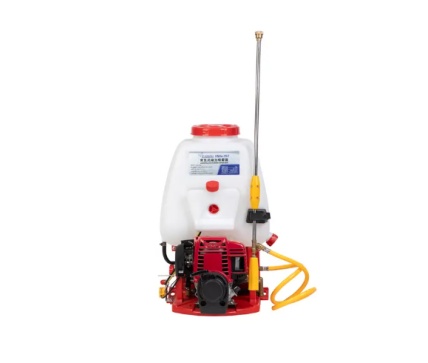
Knapsack Power Sprayers (worn on the back, powered output)
Portable Power Sprayers (carry-and-place type, flexible setups)
Frame Power Sprayers (engine/pump on a frame, higher duty work)
Trolley Power Sprayers (wheeled, easier movement with larger capacity)
Let’s break them down.
A knapsack power sprayer is carried on the operator’s back like a backpack, but unlike manual pump sprayers, it uses a powered system (battery or engine) to generate pressure. This makes it a strong choice for growers who need mobility while reducing pumping fatigue.
Best use cases
Small farms and mixed crops
Vegetable plots and gardens
Greenhouses and uneven terrain
Spot treatments and frequent spraying cycles
Why farmers choose it
Easy to move between rows
Works well where vehicles can’t enter
Better consistency than manual pumping
Limitations to consider
Tank capacity is limited compared to larger systems
Operator still carries the full weight, so comfort matters
A portable power sprayer is usually a compact pump + power unit that can be carried to the spraying area and connected to a tank, hose, or water source. It’s popular because it offers flexible configurations—users can spray from a barrel, small tank, or field container.
Best use cases
Farms needing flexible spraying points
Orchard rows or field edges
Areas where water sources vary
Users who want more power without a full trolley system
Why farmers choose it
Flexible: can pair with different tanks
Good reach when used with a longer hose
Suitable for different crop types without changing equipment
Limitations to consider
Requires setup time (tank placement, hose management)
Not as convenient for moving continuously row-by-row
A frame power sprayer mounts the engine and pump system on a stable metal frame, creating a durable “power station” that can handle more demanding agricultural spraying jobs. Compared with lightweight portable units, the frame design is built for higher duty cycles—meaning it can run longer, deliver steadier pressure, and support stronger flow for real farm workloads. Many farmers treat it as a core pump unit because it can be paired with different tanks, hose lengths, and spray guns, allowing one system to cover multiple tasks across seasons.
Best use cases
Orchards and plantations where canopy spraying requires consistent pressure
Larger farms with frequent spray schedules (weekly or even daily spraying during peak season)
Tasks requiring stronger pressure and longer spraying time, such as wide-area disinfection, perimeter spraying, and dense foliage coverage
Situations using long hoses and larger tanks, where a stable pump output is essential to avoid weak spray at the far end of the hose
Why farmers choose it
Stable structure for continuous work: the frame reduces vibration, keeps the pump/engine steady, and improves reliability during long operation
Better durability for repeated use: strong construction helps the unit withstand transport, field dust, and daily use, especially in busy seasons
Can support higher flow and longer spray distance: this makes it more suitable for long-reach spraying with a hose reel, higher-output nozzles, or larger coverage needs
Limitations to consider
Less mobile unless paired with a trolley or vehicle: the frame unit is typically placed near the tank or loaded onto a small vehicle for moving between areas
May require more maintenance than simpler portable units: higher power systems usually need regular checks (oil, filters, pump seals, hose connections) to maintain peak performance
Practical buying tip: If you often spray for long periods, or your farm relies on long hoses and larger tanks, a frame power sprayer usually offers the best “workhorse value” because it stays stable under pressure and performs consistently over time.
A trolley power sprayer combines the power unit and tank on a wheeled trolley, making it easier to move larger volumes of spray solution while reducing physical strain. Instead of carrying weight on your back (like a knapsack sprayer), the trolley design allows the operator to push or pull the unit along paths or between rows. This is why it’s a popular option for growers who spray frequently, manage medium-scale areas, or want a more comfortable daily workflow.
Best use cases
Medium-sized farms that need more capacity than handheld or backpack systems
Nurseries and large gardens, where you spray across multiple zones and need frequent refills minimized
Continuous row spraying where paths are available, such as greenhouse aisles, orchard lanes, or structured crop rows
Operators who want to reduce physical strain, especially for longer spraying sessions
Why farmers choose it
Larger capacity means fewer refills: more working time per tank improves efficiency and reduces downtime
Wheeled movement reduces fatigue: operators can spray longer without the discomfort of carrying liquid weight
Good balance of power and convenience: trolley units often deliver stronger output than basic portable sprayers, while remaining easier to move than heavy frame systems alone
Limitations to consider
Needs relatively smooth paths: trolley wheels work best on firm lanes, greenhouse floors, or maintained farm roads
Not ideal for steep slopes or very uneven fields: on rough terrain, stability and handling become harder, and knapsack or frame systems may be more practical
Sprayer Type | Mobility | Capacity | Best For | Main Advantage |
Knapsack Power Sprayers | High | Low–Medium | small plots, greenhouse, spot spray | flexible movement in tight spaces |
Portable Power Sprayers | Medium | depends on tank | flexible setups, mixed farm work | adaptable to different tanks/water sources |
Frame Power Sprayers | Low–Medium | depends on tank | orchards, long hose work, frequent spray | stronger duty, stable continuous work |
Trolley Power Sprayers | Medium | Medium–High | nurseries, medium farms, long sessions | less fatigue + fewer refills |
To choose correctly, we recommend answering four questions:
How large is your spraying area per day?
Small areas → knapsack; longer daily coverage → trolley or frame.
Is your field easy to move through?
Uneven terrain → knapsack; smooth paths → trolley.
Do you need long hose distance?
Long hose and high duty work → frame power sprayer.
Do you spray frequently or occasionally?
Frequent spraying → prioritize stable pressure and operator comfort.
Agricultural sprayers do not need overly complicated categories to be selected correctly. In most real applications, growers can choose confidently by understanding these four practical sprayer types: Knapsack Power Sprayers, Portable Power Sprayers, Frame Power Sprayers, and Trolley Power Sprayers. Each one solves a different problem—mobility, flexibility, duty strength, or working comfort. When you match the sprayer type to your crop layout and working routine, you get better coverage, lower labor stress, and more consistent spraying results.
At Taizhou Kesiwo Garden Tools Co., Ltd., we focus on building sprayer solutions that are practical for daily farm work—stable performance, easy operation, and durable structures. If you want to select the right type for your crop and market needs, you can learn more from Taizhou Kesiwo Garden Tools Co., Ltd. Our team can recommend suitable configurations based on your working area, spraying frequency, and mobility needs.
The most practical types are Knapsack Power Sprayers, Portable Power Sprayers, Frame Power Sprayers, and Trolley Power Sprayers.
A knapsack power sprayer is often best because it’s easy to carry between rows and works well in tight spaces.
Choose a frame power sprayer when you need longer operation time, stronger duty performance, or long hose spraying for orchards and plantations.
Because trolley systems reduce fatigue and offer larger capacity, making them efficient for longer spraying sessions with fewer refills.


