
Views: 0 Author: Site Editor Publish Time: 2026-09-21 Origin: Site


Inconsistent water management causes massive crop losses globally every single year. It is the height of summer, your fields are parched, and your irrigation setup suddenly fails. Why? The equipment simply could not handle the sustained load. I have seen entire harvests ruined just because a farm manager chose the wrong machinery based on guesswork. Selecting the incorrect equipment does not merely waste electrical energy. It catastrophically destroys your bottom line and damages expensive underground infrastructure. In this engineering guide, we will walk through how to properly evaluate your environmental sources, calculate precise pressure requirements, and confidently select the exact equipment your farm needs to thrive.
Before diving into the mechanical details, we must look at where the industry is heading. Recent shifts in global climate patterns have made rainfall highly unpredictable. This forces even traditional rain-fed farms to adopt supplemental irrigation to secure their yields. Market data indicates a massive surge in the adoption of precision agriculture. Modern farmers are moving away from brute-force water delivery toward highly targeted, energy-efficient systems. Regulatory pressures regarding groundwater conservation are also tightening globally. Consequently, the agricultural sector now demands machinery that delivers high hydraulic efficiency while integrating seamlessly with smart controllers. Investing in outdated, inefficient technology today means facing severe operational bottlenecks tomorrow.
The foundational step in selecting agricultural water pumps is identifying the exact physical nature of your fluid source. The location, depth, and overall clarity of the water dictate the physical design and suction capabilities required from the machinery.
Surface water sources are highly accessible but present specific environmental challenges regarding debris and fluctuating seasonal levels. For these open sources, above-ground centrifugal units are typically the industry standard. Because the fluid is at or near the surface, the motor does not need to overcome massive vertical lifts. However, surface water is rarely pristine. It is absolutely imperative to install robust intake filtration systems. Specialized foot valves with fine screens prevent algae, thick mud, and organic debris from entering the housing and destroying the internal impeller.
Extracting groundwater requires a precise understanding of the static water level within your well. Specifically, if the water table remains consistently within 25 vertical feet of the surface, standard centrifugal or shallow-well jet setups can successfully pull the water upward utilizing atmospheric pressure. Physics strictly limits the ability of a surface-mounted device to pull water beyond that 25-foot threshold. For deep groundwater extraction, submersible units are mandatory. Placed entirely underwater, these hermetically sealed motors push the fluid up the discharge pipe. This pushing action is a highly energy-efficient mechanical process.
Some agricultural operations rely on municipal water supplies or shared regional pipelines. While this water arrives already pressurized, the existing municipal pressure is frequently insufficient to operate extensive irrigation networks. In these specific scenarios, an inline booster system is utilized to artificially increase the pressure to the exact thresholds required by the field hardware.
Understanding the mechanical differences between core equipment categories ensures you invest in machinery that perfectly matches your environmental constraints. Relying on estimates here frequently leads to burned-out motors and dry fields.
| Pump Type | Best Water Source | Primary Mechanism | Efficiency Profile |
|---|---|---|---|
| Centrifugal | Surface water, shallow wells | Pulls water using a rapidly rotating impeller | High flow, moderate pressure |
| Submersible | Deep boreholes | Pushes fluid directly from below the surface | Highly efficient, zero priming needed |
| Turbine | High-yield deep wells | Vertical shaft equipped with staged impellers | High capacity, extreme heavy-duty |
| Jet Pump | Shallow to medium wells | Utilizes an ejector nozzle to create vacuum suction | Moderate flow, highly reliable |
Centrifugal systems are arguably the most common fluid-moving devices used globally in agriculture. They operate by utilizing a spinning impeller to create a vacuum that draws fluid into the intake. The fluid is subsequently expelled outward using centrifugal force. Because they sit safely above ground, they are incredibly versatile and easy to maintain. This makes them the ideal candidate for moving large volumes of liquid from nearby rivers or holding ponds.
Engineered to operate while fully submerged in the source, these units consist of a tightly sealed motor close-coupled to the main body. By pushing water to the surface rather than attempting to pull it, they completely bypass the suction lift limitations that plague surface models. Furthermore, they are virtually silent during operation and immune to cavitation issues caused by a sudden loss of prime.
Vertical turbine systems are heavy-duty, industrial-grade machines designed for high-capacity applications. They are typically deployed in deep municipal-style wells where a standard submersible might not provide adequate flow. They consist of a surface-mounted motor connected to a submerged pumping unit via a long, rigid vertical shaft. This keeps the main motor above ground for easier maintenance access.
Selecting the energy source for your equipment is a bottom-line financial decision. It directly impacts your initial capital expenditure, daily operating costs, and seasonal maintenance schedule.
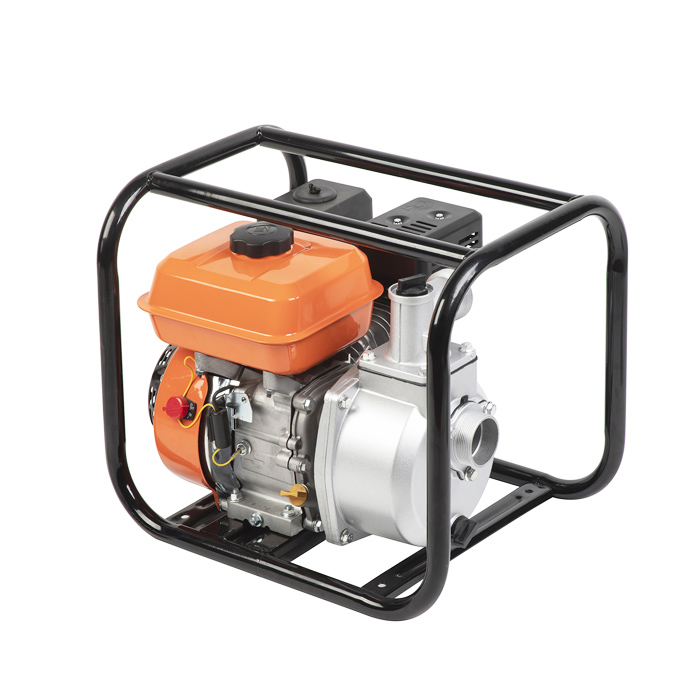
For smaller acreages, temporary watering setups, or highly remote fields, equipment portability is a daily reality. In these situations, gasoline water pumps offer unmatched flexibility. They feature a significantly lower upfront purchase cost and are relatively lightweight for a single person to carry. You can deploy them instantly without waiting for utility companies to drop electrical lines. Modern 2-inch and 3-inch gasoline models often feature durable cast iron volutes and impellers, easily delivering flow rates upwards of 150 to 260 gallons per minute. However, gasoline engines incur higher ongoing fuel expenses and demand strict routine maintenance like oil changes and carburetor cleanings.
Large-scale commercial farming operations require continuous, aggressive fluid transfer. These setups typically rely on diesel combustion. A heavy-duty diesel water pump generates incredible torque, making it highly capable of moving massive volumes of water over long distances. High-performance diesel units often come equipped with robust air-cooled four-stroke engines and reinforced frames. They easily handle heavy loads for 10 to 12-hour stretches. Diesel engines are inherently more durable and fuel-efficient than their gasoline counterparts under continuous strain. The trade-off is a higher initial investment, heavier physical weight, and louder operational noise.
If your property has reliable access to the commercial electrical grid, electric motors are generally the most cost-effective long-term solution. Electric units require exceptionally little maintenance, operate quietly, and boast incredibly long lifespans. They are also the easiest to integrate with modern digital timers and automated greenhouse systems. The primary drawback is their strict tethering to grid availability. Power outages can instantly disrupt critical watering schedules.
To read a manufacturer technical spec sheet accurately, you must understand foundational hydraulic metrics. Guessing these numbers inevitably leads to severely inefficient crop hydration.
Flow rate measures the raw volume of liquid the machine can move within a specific timeframe. In the United States, this is measured in Gallons Per Minute. Internationally, Liters per Minute or Cubic Meters per Hour are standard. To determine your requirement, calculate the peak demand of your crops. For instance, if your tomato field requires 10,000 gallons applied over a 4-hour window, your equipment must reliably deliver a minimum baseline of 42 Gallons Per Minute.
Total Dynamic Head is arguably the single most critical calculation in system sizing. It represents the total physical and frictional resistance the motor must overcome to move the fluid from the source to the final field emitter. This metric is calculated in feet and consists of two main components. The first is Static Head, representing the vertical elevation change. The second is Friction Head, which is the resistance created as fluid rubs against the inside of PVC pipes, elbows, and valves. As a general rule of thumb, the higher the head pressure, the lower the actual flow rate the machine will deliver at the end of the line.
Pressure is measured in Pounds per Square Inch or Bar. This is the actual force that pushes fluid through your lateral lines and out of the nozzles. Different emitters require highly specific pressure ranges to function correctly. If the pressure drops too low, impact sprinklers will simply refuse to rotate. If it spikes too high, delicate drip tape can violently burst. Head and pressure are mathematically bound, where one Pound per Square Inch equals exactly 2.31 feet of Head.
Selecting machinery based solely on its horsepower is a deeply flawed engineering approach. Different watering methods have vastly different pressure and flow requirements. To optimize distribution and avoid shattering your underground infrastructure, you must strictly align the equipment capabilities with your specific field setup.
Drip setups are meticulously designed to deliver moisture directly to the root zone of the plants. This drastically minimizes evaporation and wasteful runoff. Because the fluid is distributed slowly through tiny emitters, this system requires low operating pressure, typically between 10 and 30 Pounds per Square Inch. It also needs a low but highly consistent flow rate. Utilizing an aggressive high-pressure unit for a drip system without proper pressure-reducing valves will blow out the tape. Smaller electric centrifugal units are ideal here.
Sprinkler systems operate on the exact opposite end of the hydraulic spectrum. Massive center pivots and high-impact brass field sprinklers require significant force to push fluid through restrictive nozzles and throw it evenly over a wide radius. Operating pressures for these setups generally range from 40 to well over 100 Pounds per Square Inch. If your motor cannot generate sufficient pressure, the water will merely dribble out of the nozzles. High-pressure centrifugal or deep-well turbine systems are standard for these demanding applications.
Flood methods involve pumping massive volumes of water directly into field trenches or open furrows. This traditional method does not rely on forcing fluid through tiny nozzles, meaning the pressure requirement is exceptionally low. However, the flow rate requirement is staggering, frequently exceeding 500 to 1,000 Gallons Per Minute. For this application, high-volume axial flow or large centrifugal units are the industry standard.
Sizing your equipment is a strict mathematical process. Purchasing an improperly sized unit will lead to severe operational inefficiencies. Follow this logical progression to calculate your exact requirements before consulting a manufacturer catalog.
First, objectively determine how much moisture your crops need during peak summer growing seasons. Divide your total daily gallon requirement by your preferred operating hours. For example, if a 10-acre field requires 27,000 gallons per day, and you plan to run the system for 8 hours, you divide 27,000 by 480 minutes. Your chosen machine must be capable of delivering a minimum of 56 Gallons Per Minute.
Static head is the absolute vertical distance the fluid must travel against gravity. Measure the vertical distance from the lowest expected water level in your well during a drought to the highest elevation point of discharge in your field. Add these two numbers together to find your Total Static Head.
As fluid travels rapidly through pipes, it experiences severe resistance against the inner walls. Attempting to save money by using smaller diameter PVC often results in massive friction loss. This forces you to buy a much larger, more expensive motor to compensate. Always consult a standard pipe friction loss chart to find the equivalent feet of head loss for your specific pipe material and total length.
Every legitimate piece of agricultural machinery comes with a pump curve graph. This chart plots Flow Rate on the horizontal axis and Total Dynamic Head on the vertical axis. Locate your calculated head pressure and follow the line across to your required flow rate. The intersection point must fall directly on or slightly below the performance curve. Ideally, this intersection should sit near the center of the arc, known as the Best Efficiency Point. Operating here ensures the motor runs smoothly without overheating.
Even highly experienced agricultural buyers can make critical errors during the procurement process. Avoiding these frequent pitfalls will save you from premature equipment failure and inflated operational costs.
A persistent misconception is that bigger is always better. Installing an oversized unit forces the system to operate on the far right side of its performance curve. This leads to excessive fluid velocity, causing severe water hammer. These violent pressure surges easily shatter PVC pipes and blow out valves. Furthermore, oversized units are highly prone to cavitation, a destructive phenomenon where low pressure causes water to vaporize into tiny bubbles that aggressively implode against the impeller.
Many buyers meticulously calculate their vertical lift but completely forget to account for the friction loss caused by thousands of feet of lateral piping. If you fail to factor in friction head, the machinery you purchase will be severely underpowered. The fluid may technically reach the field, but it will lack the necessary kinetic force to operate impact sprinklers effectively.
Selecting a heavy three-phase electric motor for a remote field with an unstable grid connection will result in interrupted cycles and severely stressed crops. For off-grid or highly remote applications where running electrical infrastructure is cost-prohibitive, relying on robust combustion engines remains the most practical and reliable choice.
When drawing from natural ponds or shallow lakes, the fluid is naturally filled with silt, sand, and organic debris. Failing to install high-capacity intake screens allows these harsh abrasives to enter the housing. Suspended sand acts exactly like liquid sandpaper. It rapidly wears down mechanical seals and brass impellers, effectively reducing a ten-year lifespan to mere months.
Choosing the correct equipment is a vital investment that directly impacts the survival and yield of your crops. You must calculate your flow and pressure requirements with mathematical accuracy. Always evaluate the physical constraints of your primary water source before purchasing any machinery. Proper sizing prevents wasted electrical or fuel energy and protects your expensive underground piping from severe damage. By matching the right machinery to your specific irrigation style, you ensure a highly reliable system that will support your farm productivity for many profitable years to come. If you are ready to upgrade your irrigation setup, evaluate your field requirements and explore the professional-grade solutions available at Agro-Tools to find the perfect match for your agricultural needs.
For a small 5-acre farm, the best choice largely depends on your specific water source. If you are drawing from a shallow pond or nearby stream, a mid-range portable centrifugal unit is highly recommended. Because 5 acres require less massive flow compared to commercial operations, portability and cost-effectiveness are key. A 2-inch or 3-inch gasoline-powered model is often ideal as it allows you to move the unit around the property easily without worrying about electrical wiring. If you have reliable grid access near the source, a small electric model will offer quieter operation and significantly lower maintenance costs.
No, using a standard residential pump for agricultural purposes is highly discouraged and often leads to rapid equipment failure. Residential models are engineered for intermittent use, such as running a shower or a washing machine for short twenty-minute periods. Agricultural irrigation requires machinery to run continuously at maximum load for 8 to 12 hours a day. Farm-grade equipment features heavy-duty continuous-duty motors, reinforced cast-iron or stainless-steel housings, and specialized impellers designed to handle rigorous demands and potential debris.
A high-quality diesel unit is built for extreme durability and longevity in harsh environments. With strict adherence to routine maintenance schedules, a commercial-grade diesel engine can easily last between 10,000 and 15,000 operating hours before requiring a major mechanical overhaul. To achieve this lifespan, operators must strictly follow manufacturer guidelines regarding regular oil changes, replacing fuel and air filters, and ensuring the system never runs dry.
These two metrics serve completely different irrigation needs. A high-pressure model focuses on generating high force to push fluid over long distances, up steep elevations, or through restrictive nozzles. This makes it mandatory for impact sprinklers and center pivot systems. Conversely, a high-flow model prioritizes moving a massive volume of liquid very quickly but with very little pushing force. High-flow units are strictly used for flood or furrow irrigation, where moving large quantities of water into open field trenches is the primary goal.
The decision is entirely dictated by the vertical depth of your water source. The laws of physics dictate that a surface-mounted centrifugal unit can only suction fluid from a maximum depth of about 25 feet at sea level due to atmospheric pressure limits. If your source is a deep well where the water table sits 50 or 200 feet below ground, you physically cannot use a standard surface model. In these cases, you must use a submersible unit, which is lowered directly into the well casing to forcefully push the fluid up to the surface.
Calculating friction loss requires knowing your pipe inner diameter, the total length of the pipe run, the material of the pipe, and your desired flow rate. Water moving rapidly through a narrow pipe creates significant friction against the walls, reducing the final pressure at the emitter. Engineers use a standard friction loss chart to find the equivalent head loss per 100 feet of pipe. You must also add the equivalent length of any elbows, tees, and valves in your system, as these fittings create additional turbulence and resistance.
Winterizing your equipment is critical to prevent catastrophic freeze damage. First, completely drain the pump casing, volute, and all suction or discharge hoses. Water left inside will expand as it freezes, easily cracking cast iron housings. For engine-driven models, drain the fuel tank or add a fuel stabilizer to prevent the gas or diesel from degrading. Finally, store portable units in a dry, climate-controlled shed. For permanent installations, wrap exposed above-ground pipes with industrial insulation tape and cover the motor housing with a weatherproof tarp.


