
Views: 0 Author: Site Editor Publish Time: 2026-09-02 Origin: Site


Transitioning from casual garden maintenance to structural landscaping requires a mental shift. You must completely change how you evaluate equipment. Basic consumer-grade tools often fail under significant stress. They simply break during heavy clearing, trenching, or complex hardscaping tasks. Subpar gear causes frustrating project delays. It also creates dangerous safety hazards for the user. You need reliable tools built for serious demands.
This guide provides a practical framework for evaluating professional landscaping tools. We base this framework primarily on absolute durability and task scalability. You will learn how to measure material integrity accurately. We also show you how to match tool specifications to your actual property needs. This strategy helps you allocate your budget effectively. You will build a powerful, lasting tool ecosystem without overbuying unnecessary gadgets.
Evaluate hand tools based on material integrity (carbon steel vs. stainless) and weld quality, not just immediate price.
Standardize your power tool ecosystem early to minimize redundant battery and charger costs.
When investing in a chain saw for heavy brush or tree management, prioritize safety mechanisms and match the bar length to your specific property demands.
Factor local dealer support, parts availability, and warranty conditions into your final purchasing decision.
You cannot purchase the right tools without understanding your exact project scope. Buying professional gear for a small urban courtyard wastes money. Conversely, buying lightweight consumer gear for a five-acre wooded lot guarantees equipment failure. You must define your operational parameters first.
Begin by mapping out your physical landscape. You should evaluate three specific property variables before looking at tool catalogs:
Total Acreage: Large properties demand continuous runtimes. Small properties allow for more frequent tool charging or resting.
Terrain Type: Rocky soils require forged steel tools. Sandy or loamy soils permit lighter stamped steel alternatives.
Primary Vegetation: Mature hardwoods demand aggressive cutting power. Ornamental shrubs only require precision hand tools.
Professionals divide tasks into seasonal heavy-use events and weekly maintenance. Spring clearing and fall pruning represent heavy-use events. You push your equipment to its absolute limit during these weeks. Weekly maintenance involves lighter tasks like edging or spot-pruning. You should grade tools based on their highest-stress application. A tool surviving weekly trimming might completely shatter during a heavy spring structural prune.
Smart landscapers follow the 80/20 budget rule. You should invest 80% of your budget in the core equipment used for the most labor-intensive tasks. Spend the remaining 20% on supplementary tools. Under-speccing your core tools creates severe hidden costs. Cheap tools bend, snap, or rust prematurely. They also cause ergonomic injuries. Joint strain from a poorly balanced shovel easily sidelines your entire weekend project. You avoid frequent replacement cycles by investing heavily upfront.
Hand tools serve as the true backbone of any landscaping project. Power tools handle the bulk removal, but hand tools deliver the final finish. You must evaluate them critically. Material integrity dictates both performance and longevity.
Shovel head construction varies wildly across price points. Forged steel heads begin as a single block of heated metal. Manufacturers pound this block into shape. This process aligns the grain structure of the steel. It creates immense strength. Stamped steel heads originate from a flat sheet. Factories press them into shape. Stamped steel bends easily under heavy leverage. You should always select closed-back shovel designs. Open-back shovels collect heavy soil in the rear cavity. This accumulated dirt adds unnecessary lifting weight. It increases your physical fatigue rapidly.
Table: Core Hand Tool Material Specifications
Handle Material | Primary Benefit | Best Use Case | Vibration Absorption |
|---|---|---|---|
Ash Wood | Lightweight and flexible | Standard digging and lifting | Moderate |
Hickory Wood | Extreme impact resistance | Prying heavy rocks or roots | High |
Fiberglass | Weatherproof and rigid | Wet climates, heavy clay soil | Low |
Tubular Steel | Unbreakable leverage | Industrial trenching | None |
Blade mechanics matter significantly when managing plant health. Bypass pruners operate like scissors. Two sharp blades glide past each other. They create clean cuts. You must use bypass mechanisms on live, green wood. Anvil pruners feature one sharp blade meeting a flat metal block. The blade crushes through the branch. You should only use anvil pruners on dead wood. Crushing live tissue introduces disease.
You also need to check pivot mechanisms. Geared or ratcheting mechanisms multiply your hand force. They reduce the repetitive strain injuries associated with heavy pruning days.
Examine the structural joints on moving tools. Moving heavy aggregates or wet soil stresses the tool head intensely. Welded tines provide maximum structural integrity. Bolted heads also perform well under pressure. You should actively avoid friction-fit joints. A simple nail or rivet holding a rake head will loosen over time. It eventually fails during aggressive grading tasks.
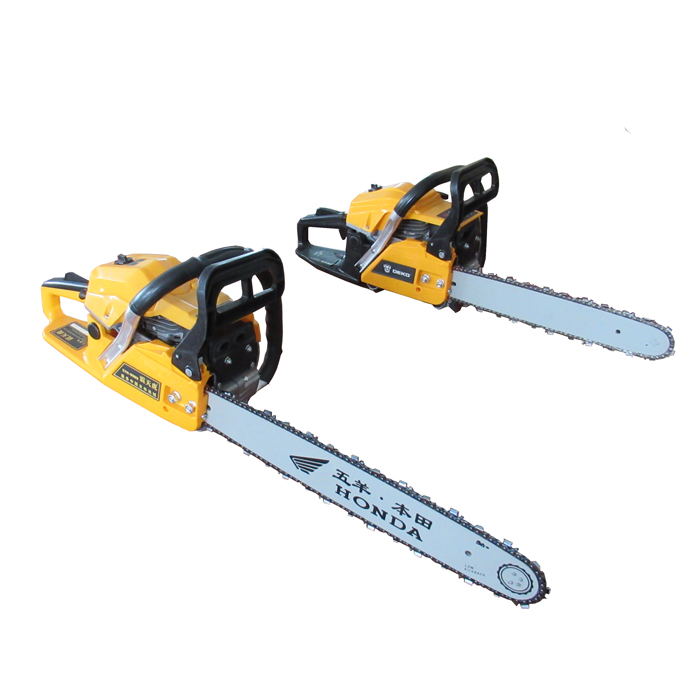
Manual clearing eventually becomes inefficient. You will hit a tipping point during heavy tree management. Hand saws and loppers suddenly become a massive project bottleneck. When thick branches and felled trees block your path, stepping up to a Chain Saw becomes absolutely critical. You must evaluate these powerful machines methodically.
Your primary decision revolves around the power plant. Gas-powered machines and cordless battery models each serve distinct roles.
Gas-Powered: These machines dominate remote acreage work. They provide continuous, all-day runtime. You simply refill the tank and keep cutting. However, they require strict fuel management. You must use ethanol-free fuel. Ethanol absorbs moisture and destroys small carburetors quickly. They also demand regular engine maintenance.
Battery-Powered (Cordless): Lithium-ion technology transformed residential landscaping. These units offer zero emissions. They produce significantly less noise fatigue. You simply push a button and start working. They represent the ideal choice for neighborhood environments and standard yard maintenance.
You must match the bar length to your specific tasks. Bigger does not equal better. A massive bar adds unnecessary weight. It causes extreme operator fatigue during simple jobs. A 12-14 inch bar handles basic pruning and limb removal perfectly. You should select a 16-20 inch bar for felling medium trees or bucking heavy firewood. Professional models exceed 20 inches, but homeowners rarely need them.
Heavy power tools pose inherent risks. You cannot compromise on safety features. Look for inertia-activated chain brakes. These stop the blade instantly during a sudden upward kick. You also need anti-vibration handle systems. Heavy vibration causes nerve damage in your hands over prolonged periods. Finally, insist on low-kickback chains. They feature special depth gauges. These gauges prevent the cutter tooth from grabbing too much wood at once.
You face a crucial decision when buying cordless equipment. You are not just buying a single tool. You are committing to a brand's specific battery platform. Mixing brands creates a chaotic, expensive garage.
Every major manufacturer uses proprietary battery connections. A 20V battery from one brand will never fit another brand's tool. You must choose a voltage ecosystem carefully. An 18V or 20V system handles light residential work. It powers small drills, light trimmers, and blowers. Heavy landscaping requires a 40V, 60V, or even 80V system. These high-voltage systems deliver true gas-equivalent torque.
Evaluate manufacturers based on their broader tool lineup. The ideal brand offers massive cross-compatibility. You want one standardized power source. A single high-capacity battery should power your string trimmer, leaf blower, and your Chain Saw seamlessly. This interoperability saves you hundreds of dollars. You avoid buying redundant chargers and backup batteries.
You must factor physical storage into your ecosystem plan. Premium tools degrade rapidly if left exposed to the elements.
Calculate the total physical footprint of your tools before purchasing.
Designate a secure, absolutely dry location for lithium-ion batteries. Extreme heat or freezing temperatures destroy cell capacity permanently.
Create a low-humidity zone for high-carbon steel tools. Carbon steel holds a brilliant edge, but it rusts instantly in damp sheds.
Marketing terms often confuse buyers. Manufacturers slap the word "Pro" on consumer tools frequently. You must read the actual technical specifications. This separates true commercial viability from clever marketing.
Commercial-grade tools feature distinct, verifiable differences. They utilize brushless commercial motors. They incorporate thicker gauge metals in their decks and shafts. They feature replaceable wear parts instead of sealed, disposable units. Prosumer grades bridge the gap. They offer higher power than DIY tools but use more plastic components to reduce weight. DIY grades prioritize immediate affordability over long-term survival.
Direct-to-consumer (D2C) brands dominate social media advertising. They offer incredible initial pricing. However, they pose a massive danger. They usually lack local repair networks. If a D2C tool breaks, you must box it up and ship it away. You lose weeks of working time. Big-box retail stores offer easy purchasing, but they rarely stock specialized replacement parts.
You achieve the best long-term results by purchasing from an independent local dealer. Local dealers operate on-site repair shops. They prioritize their own customers for warranty support. They stock crucial belts, blades, and filters year-round. This localized support prevents major project delays.
Take an inventory of your immediate upcoming projects. Create a highly prioritized purchase list. Start by acquiring the single highest-impact tool required for your current landscaping phase. Master its maintenance before expanding your collection.
Selecting landscaping equipment involves much more than finding the lowest price. We must prioritize ergonomic safety, raw material quality, and long-term ecosystem compatibility. A forged steel shovel or a well-balanced high-voltage power head serves you reliably for decades. Cheap alternatives fail constantly.
Take action today by auditing your current garage inventory. Discard broken, unsafe tools immediately. Map out your next purchase based on the 80/20 rule. Focus strictly on the core equipment managing your heaviest workloads. Finally, remember your personal safety gear. Always inspect your protective chaps, heavy leather gloves, and face shields before starting heavy machinery. Safe operation guarantees a successful landscaping season.
A: Carbon steel offers superior edge retention and sheer strength. It handles heavy impacts beautifully, but it rusts easily without regular oiling. Stainless steel resists rust and corrosion naturally. However, stainless steel remains softer. It loses its sharp cutting edge faster and can bend under extreme prying pressure.
A: Yes, modern battery options offer exceptional power. High-voltage platforms (40V to 80V) easily match the torque of 35cc to 50cc gas engines. They handle heavy brush and medium tree felling without issue. You only need to monitor your battery amp-hour limits to ensure sufficient runtime for continuous workloads.
A: You should wipe off debris and check safety brakes daily. Perform seasonal maintenance by sharpening blades, checking belt tensions, and cleaning air filters every few months. Execute annual preventative maintenance by changing spark plugs, flushing fluids, and applying protective greases before winter storage.
A: No. Manufacturer warranties strictly cover factory defects, motor failures, or structural welding issues. Consumable parts like cutting chains, trimmer lines, rubber drive belts, and sharpened blades naturally degrade through use. You must budget for replacing these consumable parts regularly.


