
Views: 0 Author: Site Editor Publish Time: 2026-09-26 Origin: Site


Want higher crop yields with less manual labor? You are not alone. Stepping onto a freshly tilled field at dawn, the last thing any grower wants is to waste hours on inefficient, back-breaking planting methods. Choosing the right approach is a cornerstone of agricultural success. Yet, many cultivators find themselves torn between sowing raw seeds directly into the earth and establishing pre-grown young plants.
Both techniques are foundational to modern farming. However, understanding the nuanced differences between a seeder and a transplanter will empower you to optimize your budget and drastically improve crop survival rates. In this comprehensive guide, we break down the exact mechanical and biological distinctions. This frontline engineering perspective will help you make an informed, profitable purchasing decision tailored to your specific field conditions.
To make a sound financial decision for your farm, it is essential to first understand the mechanical definitions of these two primary planting tools. Both pieces of equipment serve the ultimate goal of establishing crops in a field. They just operate at completely different stages of a plant life cycle.
A seeder is a specialized agricultural tool designed to drop dormant seeds into the soil at a highly specific depth and spacing. The core mechanism of a standard seeder involves three distinct actions performed in a single, fluid pass. First, it opens a small trench in the soil. Next, it meters and drops the seed. Finally, it covers the seed back up with soil while lightly firming it to ensure proper contact.
These tools come in various configurations tailored to different operational scales. Manual push seeders are common in market gardens. They utilize interchangeable seed plates that click rhythmically as they accommodate different sizes, from tiny lettuce seeds to large corn kernels. For growers looking to automate the direct sowing process and ensure uniform distribution, investing in a reliable agricultural seeder is an absolute necessity. Precision metering prevents seed waste and ensures an even stand.
Conversely, a transplanter is an agricultural tool specifically designed to take young, pre-grown plants from nursery trays and plant them securely into the field. Unlike a seeder, a transplanter handles live biological material. This material already has an established root system and delicate true leaves.
The primary function of this tool is to bypass the highly vulnerable germination stage that occurs in the open field. By creating a precise hole and depositing the root ball intact, it ensures the young plant is set at the correct depth without crushing the fragile stem. Over the years, these tools have evolved significantly. We have moved from simple hand trowels to sophisticated, spring-loaded mechanisms that allow growers to plant from a comfortable standing position.
While both tools establish crops, the fundamental operational differences between them dictate how a farm manages its entire growing season. Grasping these biological and logistical contrasts is the key to optimizing your daily workflow.
The most profound difference lies in the biological stage of the plant material. Seeders are built to handle dormant, hard-shelled seeds. These seeds are resilient. They require specific soil moisture, temperature, and oxygen levels to break dormancy. The equipment must place them precisely where these underground conditions are optimal.
Transplanters handle live, actively growing plants. A seedling already has a developed root mass. The equipment must protect this delicate root ball during the transfer from tray to soil. It ensures the roots make immediate contact with the surrounding earth without being exposed to damaging air pockets.
Looking at the broader agricultural landscape, industry analysts note a definitive shift in planting methodologies. Driven by increasingly unpredictable weather patterns and soaring labor costs, modern farming trends show a growing divergence. While massive broad-acre commodity farms continue to rely heavily on advanced mechanical seeders, specialty crop growers are rapidly pivoting toward transplanting.
Recent market analyses indicate a steady annual increase in the adoption of precision transplanting technologies. This transition acts as a crucial defensive strategy against climate volatility. By starting crops indoors, growers effectively bypass the risks of late spring frosts or intense early-season downpours that frequently wash away direct-sown fields. This allows cultivators to hit premium early markets reliably.
Direct seeding remains a cornerstone of global agriculture. However, like any method, it comes with specific agronomic and economic trade-offs that must be carefully evaluated before planting season begins.
The most significant advantage of using a seeder is the financial savings on plant material. Raw seeds are exponentially cheaper than purchasing pre-grown seedlings. Furthermore, direct seeding eliminates the need to build, heat, and manage a greenhouse space. There is no daily watering of seedling trays or managing indoor climate controls.
Biologically, seeders are ideal for taproot crops. Vegetables such as carrots, radishes, beets, and parsnips biologically reject transplanting. If a taproot is disturbed or restricted in a nursery tray, the resulting vegetable will be deformed and unmarketable. For these specific crops, direct sowing is absolutely mandatory.
Despite the low barrier to entry, direct sowing is highly dependent on perfect field conditions. If the soil is too cold, seeds will rot. If it is too dry, they will simply not germinate. Additionally, a germinating seed is tiny and grows slowly. Fast-growing weeds can easily outcompete tiny crop sprouts for sunlight and nutrients, necessitating aggressive and frequent weeding.
Finally, even with precision equipment, it is common practice to over-seed slightly to guarantee a good stand. This inevitably requires workers to manually walk the rows later, crouching in the dirt to thin out excess plants. This adds unexpected labor costs to the back end of the operation.
Transplanting has become the preferred method for high-value vegetable and floral crops. It offers a level of control that direct seeding cannot match, though it requires a different set of capital investments.
A high-quality transplanter allows for exact geometric spacing in the field. Every plant is placed exactly where it needs to be, completely eliminating the labor-intensive process of thinning. Because a transplanted seedling is already several inches tall, it immediately shades the surrounding soil. This gives the crop a massive competitive advantage over newly germinating weed seeds.
Water conservation is another major benefit. When you direct seed, you must irrigate the entire field surface to keep the topsoil moist for germination. With transplanted plugs, you only need to water the established root zones. This targeted approach significantly reduces overall agricultural water consumption.
The primary drawback is the higher upfront cost of acquiring seedlings. Whether you purchase them from a commercial nursery or grow them yourself, the costs add up quickly. You have to account for plug trays, premium potting soil, greenhouse heating, and daily management.
There is also the inherent risk of transplant shock. If a seedling is mishandled, planted in overly harsh conditions, or if the roots are crushed during the process, the plant may experience temporary stunting. Using a properly designed tool that protects the root ball is critical to preventing this delay in growth.
To simplify your decision-making process, here is a direct comparison of the two methodologies based on critical farming metrics.
| Feature | Seeder | Transplanter |
|---|---|---|
| Best Suited For | Root crops, large grains, high-density greens | Fruiting vegetables, brassicas, high-value crops |
| Initial Material Cost | Very Low | Moderate to High |
| Weed Suppression | Poor | Excellent |
| Labor Distribution | Fast planting, high maintenance later | Slower prep, minimal field maintenance |
| Climate Resilience | Vulnerable to heavy rain and frost | Highly resilient, established root system |
Moving from theoretical agronomy to practical equipment selection is the most critical step for any agricultural business owner. The right tool not only dictates your daily operational workflow but also directly impacts your physical well-being. Let us look at specific equipment parameters.
For growers working with pre-grown nursery plugs, handheld tools represent a significant leap forward in planting ergonomics. Traditionally, transplanting required hours of kneeling and digging individual holes with a trowel. The single-handle transplanter turns this into a seamless, upright operation.
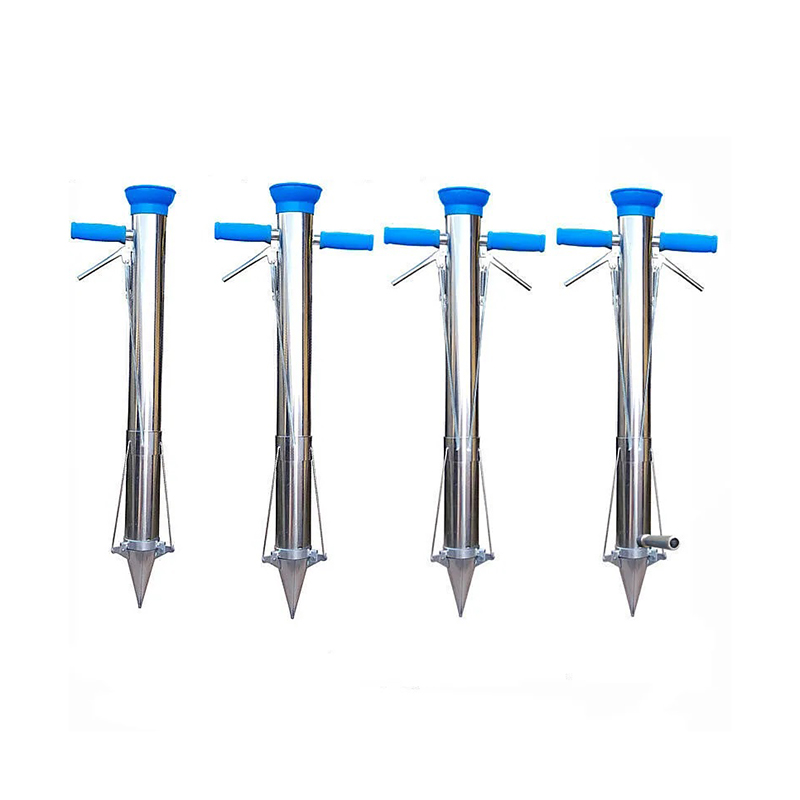
Typically constructed from lightweight stainless steel, this tool features a hollow tube with a pointed, hinged beak at the bottom. The operator plunges the closed beak into soft soil, drops a seedling down the tube, and squeezes the handle to open the beak. Weighing in at just a few pounds, a handheld single-handle seedling transplanter allows you to leave the seedling perfectly positioned in the ground with zero bending. This specific design is best suited for raised beds or operations with consistently loose, loamy soil.
As farm scale increases or soil conditions become more challenging, operator fatigue becomes a primary concern. Operating on the same biological principles as the single-handle variant, this upgraded tool features a rugged T-bar or dual-grip design.
The primary advantage here is leverage. By utilizing both arms and the operator's core body weight, a handheld double-handle seedling transplanter can easily pierce through denser, heavier clay soils or lightly compacted field beds. It provides a smoother, more controlled release of the soil-opening beak. This mechanical advantage minimizes root ball disturbance and drastically reduces shoulder strain during long planting shifts.
There is no universal best tool in agriculture. There is only the right tool for your unique context. Making the final purchasing decision requires a holistic assessment of your specific environment.
The biological characteristics of your target crop dictate the planting method more than any other factor. Root crops develop a primary taproot immediately. Transplanting damages this root, leading to unmarketable produce, making a seeder mandatory. Large grains and legumes have high germination rates and require massive plant populations, making direct seeding the only economically viable option.
Conversely, fruiting vegetables require a long, warm growing season. Starting them indoors and using a transplanter ensures they reach maturity before frost. Leafy greens and brassicas also thrive when transplanted. It ensures optimal airflow and head development while minimizing early-stage pest damage.
Labor is often the highest variable cost on a farm balance sheet. Direct seeding is incredibly fast on the front end but requires intensive back-end labor for thinning and early-season weeding. Transplanting requires more preparation time but drastically reduces field maintenance.
If you are a solo market gardener, planting thousands of seedlings by hand on your knees is physically unsustainable. Upgrading to an ergonomic transplanter allows a single person to plant hundreds of plugs per hour from a standing position. This balances the labor equation beautifully.
Your geographical location plays a massive role in this decision. Growers in northern climates with short frost-free windows rely heavily on transplanters to guarantee their heat-loving crops mature in time. Furthermore, soil texture matters. Seeders require highly refined, clump-free seedbeds to ensure tiny seeds make proper contact. If your farm has heavy, cloddy clay soil, a double-handle transplanter capable of punching through tougher layers to deposit a robust plug is far more reliable.
Agricultural equipment must be viewed through the lens of financial sustainability. While upfront costs are highly visible, long-term profitability is what keeps a farm operational year after year.
When analyzing initial capital expenditure, direct seeding presents a much lower barrier to entry. A professional-grade manual seeder is a one-time purchase, and raw seeds cost fractions of a cent. Transplanting requires a higher initial outlay. While the handheld transplanter tools themselves are highly affordable, the ongoing cost of plant material is noticeably higher.
Despite the higher upfront material costs, transplanting often yields a superior Return on Investment for high-value crops. The near perfect survival rate of transplanted crops means fewer wasted square feet in your field. Every inch of fertilized land produces a sellable product.
More importantly, transplanters offer an early market advantage. By putting established plants into the ground the moment the last frost passes, you will harvest weeks earlier than competitors who direct-seeded. Selling premium produce before the local market is saturated usually commands top-tier pricing. This rapidly amortizes the cost of your greenhouse infrastructure and planting tools.
Choosing between these tools ultimately depends on your specific farm needs, soil conditions, and crop selection. A seeder works flawlessly for root crops, large grains, and expansive fields where seed volume is high. Meanwhile, a transplanter provides unmatched survival rates, perfect spacing, and crucial weed suppression for delicate young plants and high-value vegetables.
In reality, many successful, diversified growers choose to invest in both practical tools to maximize their seasonal flexibility. By understanding the strengths of each method, you can eliminate back-breaking labor and maximize your harvest efficiency for seasons to come. Explore the full range of professional planting equipment at Agro-Tools to find the exact match for your soil and agricultural requirements today.
No. Seeders are engineered exclusively for small, dormant, hard seeds. They utilize internal plates and narrow drop tubes that would instantly crush and destroy the fragile root balls and delicate leaves of live seedlings. Seedlings require a dedicated transplanter to accommodate their physical volume without causing structural damage.
It depends entirely on the vegetables you intend to grow. For root vegetables like carrots, beets, and radishes, a manual push seeder is the best choice. For fruiting plants like tomatoes, peppers, and eggplants, a handheld single-handle transplanter will save you time, improve plant survival, and reduce physical effort.
Absolutely. Traditional trowel planting requires you to constantly kneel, dig, place the plant, and backfill the soil. Ergonomic tools like the double-handle seedling transplanter allow you to execute all these steps in one fluid motion from a standing position. This drastically increases planting speed per hour while virtually eliminating the back pain associated with field labor.
Yes, significantly. Because seedlings are already several inches tall with developed leaves when they are planted, they cast a shadow over the surrounding soil. This allows them to easily outcompete newly sprouting weed seeds for sunlight and soil nutrients. In contrast, direct-seeded crops start at the exact same size as weeds, making them highly vulnerable to weed pressure and requiring intensive early-season cultivation.
Handheld transplanters perform best in well-tilled, loamy, or sandy soils that are relatively free of large rocks and heavy clay clumps. For looser soils and raised beds, a single-handle transplanter is perfect. If your soil has a higher clay content or is slightly compacted, a double-handle transplanter provides the extra leverage needed to penetrate the ground effectively.
For a small to mid-sized operation, switching from kneeling with a hand trowel to using a stand-up manual transplanter can reduce planting time by up to 50%. More importantly, it eliminates the physical toll of bending and crawling, allowing a single worker to plant hundreds of seedlings per hour without experiencing severe fatigue or back strain.


