
Views: 0 Author: Site Editor Publish Time: 2026-02-25 Origin: Site


Healthy crops rarely happen by chance. Behind consistent yields, effective pest control, and balanced plant nutrition lies one essential process supported by Agricultural Sprayers. Spraying in agriculture refers to the controlled application of liquids that protect, nourish, and support crop development across different growth stages. From small gardens to commercial farms, spraying has become a core agricultural practice that directly influences productivity and operational efficiency.
At Taizhou Kesiwo Garden Tools Co., Ltd., we approach spraying as both a technical process and a practical field task. Reliable sprayer design helps farmers deliver treatments accurately while reducing waste, labor intensity, and environmental impact. Understanding what spraying means, how it works, and which equipment is best suited for different conditions allows growers to make smarter equipment decisions and achieve better results in daily operations.
Spraying in agriculture is the process of applying liquid substances in a controlled manner to crops, soil, or surrounding growing environments. These substances may include fertilizers, pesticides, herbicides, fungicides, disinfectants, or plant growth regulators.
The purpose is precision and consistency. Instead of manual spreading, spraying distributes materials evenly across plant surfaces, ensuring uniform coverage. This consistency helps reduce untreated areas that may become sources of pest outbreaks or nutrient deficiency.
Spraying occurs throughout the crop lifecycle. Early applications protect seedlings, mid-season spraying controls pests and diseases, and later treatments support yield quality and harvest preparation.
Modern farming requires efficiency. Spraying enables timely interventions that protect crops while optimizing input usage.
Key advantages include:
• Uniform treatment coverage
• Faster field operations
• Reduced labor requirements
• Lower chemical waste
• Improved crop health
Without spraying, farmers would struggle to manage pests and diseases at scale. Precision spraying ensures treatments reach all plants rather than only visible problem areas.
Spraying also supports cost control. By applying correct quantities at the right time, farmers avoid excessive product use while maintaining effectiveness.
Agricultural sprayers are designed to match different farm sizes, crop structures, and working intensities. While there are many sprayer categories in the market, practical field work often relies on power sprayers that deliver stronger pressure, wider coverage, and higher efficiency.
At Taizhou Kesiwo Garden Tools Co., Ltd., our agricultural sprayer lineup focuses on four core categories widely used in modern farming operations.
These include:
• Knapsack Power Sprayers
• Portable Power Sprayers
• Frame Power Sprayers
• Trolley Power Sprayers
Each type serves a specific operational scenario, allowing farmers to choose equipment based on mobility, capacity, and spraying intensity.
Knapsack power sprayers combine mobility with powered spraying performance. They are ideal for orchards, greenhouses, and uneven terrain where flexibility is important. Operators can move easily while maintaining stable spray pressure, making this type suitable for medium-scale and targeted applications.
Portable power sprayers offer compact design with strong output. They are commonly used for garden work, small farms, and maintenance tasks that require quick setup and efficient spraying. Their lightweight structure makes transportation simple while still providing reliable performance.
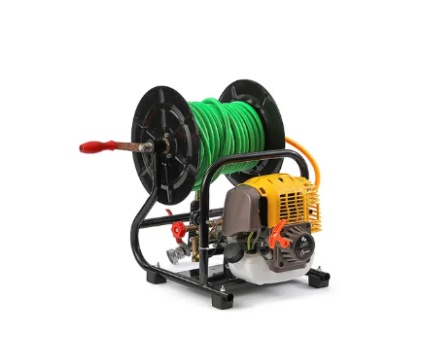
Frame power sprayers are built for durability and continuous operation. The rigid frame structure protects core components and allows larger tank capacity. This type is often used in farms that require longer spraying sessions and consistent high pressure.
Trolley power sprayers are designed for high efficiency and reduced operator fatigue. Mounted on wheels, they allow easy movement across fields while carrying larger liquid volumes. This makes them especially suitable for larger farms, orchards, and repetitive spraying tasks.
Sprayer Type | Mobility | Best Use | Key Advantage |
Knapsack Power Sprayer | High | Orchards, greenhouses | Flexible movement |
Portable Power Sprayer | High | Small farms, gardens | Lightweight efficiency |
Frame Power Sprayer | Medium | Continuous spraying | Durability |
Trolley Power Sprayer | Medium–High | Large areas | Reduced fatigue |
By focusing on these core agricultural sprayer types, farmers can select equipment that aligns with real operational needs while improving spraying efficiency and consistency.
Agricultural sprayers operate by pressurizing liquid solutions and breaking them into controlled droplets through specialized nozzles. Once atomized, these droplets are evenly distributed across plant surfaces to deliver nutrients, pest control treatments, or protective solutions. The goal is to achieve consistent coverage while minimizing waste and drift.
The core components of most agricultural sprayers include a liquid tank for storage, a pump system that generates pressure, spray nozzles responsible for droplet formation, delivery hoses and lances for direction, and a flow control mechanism that regulates output. Each component plays a critical role in maintaining spraying accuracy and efficiency.
Droplet size is particularly important. Fine droplets provide better surface coverage and penetration, which is useful for pest and disease control. Larger droplets help reduce drift, making them suitable for windy conditions or herbicide application. A well-designed sprayer balances droplet size, pressure stability, and spray pattern to ensure reliable performance. Consistent pump operation directly influences pressure stability, which determines droplet uniformity and overall spraying effectiveness.
Spraying performance depends not only on equipment quality but also on operating conditions. External factors such as wind and weather can significantly influence spray distribution. Wind may cause drift, reducing treatment effectiveness and potentially affecting surrounding areas.
Nozzle selection, pressure level, operator movement speed, and liquid formulation also affect results. Incorrect pressure can create uneven droplets, while inconsistent walking speed leads to irregular coverage. Proper technique, combined with suitable equipment settings, allows farmers to maximize the efficiency and effectiveness of their agricultural sprayers.
Different spraying techniques are applied depending on crop type and management strategy.
Common methods include:
• Broadcast spraying
• Targeted spraying
• Spot spraying
• Mist spraying
• Air-assisted spraying
Broadcast spraying covers entire fields and is widely used for large-scale crops. Targeted spraying focuses on specific areas, reducing chemical use. Mist spraying is ideal for orchards and greenhouse environments.
Modern sprayers often support multiple spraying methods, providing flexibility for different farming tasks.
Reliable equipment improves both efficiency and user experience.
Advantages include:
• Stable pressure output
• Consistent spray patterns
• Improved durability
• Reduced operator fatigue
• Easier maintenance
Ergonomic design is particularly important for manual sprayers. Balanced weight distribution and comfortable straps reduce physical strain during extended use.
Durable materials ensure long service life even in demanding agricultural environments.
At Taizhou Kesiwo Garden Tools Co., Ltd., product development focuses on performance stability and practical usability in real field conditions.
Routine maintenance ensures long-term performance and spraying accuracy.
Recommended practices:
• Clean tanks after use
• Flush nozzles regularly
• Inspect hoses and seals
• Check pump performance
• Store equipment properly
Nozzle wear is one of the most common causes of reduced spray quality. Regular inspection helps maintain consistent droplet distribution.
Preventive maintenance reduces downtime and extends equipment lifespan.
Selecting a suitable sprayer requires understanding operational needs.
Key considerations:
• Tank capacity
• Application frequency
• Crop structure
• Portability requirements
• Durability expectations
Small farms prioritize mobility and ease of use, while larger operations focus on efficiency and coverage. Versatile sprayers support multiple tasks across different seasons.
Equipment that balances durability and comfort improves long-term productivity.
Sustainable agriculture emphasizes efficient resource use and reduced environmental impact.
Agricultural sprayers support sustainability by enabling:
• Precise chemical application
• Reduced runoff
• Lower waste
• Improved pest management strategies
Precision spraying helps farmers apply treatments only where necessary. This reduces excessive chemical usage and supports responsible farming practices.
Modern sprayer design contributes to both productivity and environmental stewardship.
Understanding what spraying in agriculture involves allows farmers to improve crop protection, optimize resource use, and enhance operational efficiency. Reliable farm spraying equipment ensures consistent coverage, adaptable performance, and long-term usability across different agricultural environments.
At Taizhou Kesiwo Garden Tools Co., Ltd., we focus on designing agricultural sprayers that support real-world field demands. Our approach combines durability, ergonomic design, and stable performance so growers can complete spraying tasks confidently and efficiently. Whether for gardens, orchards, or field crops, selecting dependable spraying equipment plays a critical role in achieving consistent results.
If you are exploring spraying solutions or planning to upgrade your equipment, we welcome you to learn more about our agricultural sprayers and contact Taizhou Kesiwo Garden Tools Co., Ltd. for professional guidance.
1. What is spraying in agriculture used for?
Spraying applies fertilizers, pesticides, and nutrients to crops to support growth and protection.
2. Which agricultural sprayer is best for small farms?
Backpack and electric sprayers are commonly preferred because they balance mobility and efficiency.
3. How often should sprayers be cleaned?
Sprayers should be cleaned after each use to prevent clogging and maintain spray quality.
4. Why is nozzle selection important in agricultural spraying?
Nozzles determine droplet size and spray pattern, directly affecting coverage and treatment effectiveness.


