
Views: 0 Author: Site Editor Publish Time: 2026-08-23 Origin: Site


Maintaining a lush garden demands physical effort, time, and the right tools. Using subpar equipment quickly leads to muscle fatigue and accidental damage to your favorite plants. You need reliable gear to keep your shrubs healthy without breaking your back.
Choosing the perfect garden tool requires balancing raw cutting power against ergonomic sustainability. You also want to avoid high maintenance hurdles over the long term. Many homeowners struggle to find the exact sweet spot for their unique yard size and hedge types.
This guide establishes the baseline criteria for evaluating outdoor maintenance equipment. We will explore why a Double Edged Hedge Trimmer has become the absolute standard for residential and prosumer needs. You will learn exactly how to align blade lengths, power sources, and cutting capacities to your specific landscaping goals.
Form Factor Standard: A double edged hedge trimmer offers the most versatility for sweeping multi-directional cuts, significantly reducing user fatigue.
Power Source Reality: Modern 36V-40V battery platforms have effectively matched residential gas models in torque, though gas remains relevant for remote, all-day commercial use.
Cut Capacity Over Blade Length: Prioritize a 3/4-inch to 1-inch tooth spacing (cut capacity) over excessively long blades, which can unbalance the tool.
Ecosystem Commitment: Purchasing a cordless model is an investment in a battery ecosystem; evaluate the brand’s broader outdoor power equipment lineup before committing.
Shaping shrubs requires continuous movement. Blades cutting on both sides allow for a fluid sweeping motion. You can cut from left to right, then immediately sweep back from right to left. You never have to flip the machine upside down. You avoid repositioning your entire body for every new pass. This directional efficiency drastically reduces the physical strain on your shoulders and lower back. When you use a Double Edged Hedge Trimmer, you finish the job faster because every movement removes foliage.
Industry terminology often confuses buyers. Let us clarify the difference between single-action and dual-action mechanisms. Single-action tools feature one moving blade sliding over a stationary bottom plate. They tend to vibrate heavily. They often snag on thicker branches. Modern double-edged models usually feature dual-action blades. Two separate blades move in opposite directions simultaneously. This opposing movement actively cancels out lateral vibration. It slices through stems cleanly rather than pushing them away. You experience less arm numbness and achieve a much smoother cut.
You might wonder if single-sided trimmers still have a place in modern landscaping. They do exist for highly specialized, straight-line commercial shaping. Professionals use them to cut long, flat tops on massive privacy screens. However, the double-edged profile remains the most practical choice for 95% of typical garden maintenance tasks. It handles curved topiaries, tight corners, and basic boundary hedges effortlessly. For nearly every homeowner and prosumer, buying anything else limits versatility.
Battery technology dominates the current market for good reason. Cordless models require incredibly low maintenance. They produce zero emissions. You get an instant start every time you pull the trigger, and they operate quietly. Your neighbors will appreciate the low noise levels on Sunday mornings.
However, cordless platforms have downsides. You commit to a specific battery ecosystem once you buy in. You also face runtime limitations on thicker, sprawling properties.
Recommendation criterion: We recommend battery power for properties under 1 acre. Look for brushless motors to maximize runtime. Pair the tool with 2.0Ah to 4.0Ah batteries. This specific battery size perfectly balances cutting power and handheld weight.
Gasoline models represent raw, unrestricted power. They provide maximum torque for dense, woody stems. You can run them all day simply by refilling the fuel tank.
The drawbacks are significant. Gas engines vibrate intensely. They emit loud noises and exhaust fumes. You must mix fuel and perform regular carburetor maintenance to prevent ethanol damage. Furthermore, these machines weigh considerably more than battery equivalents.
Recommendation criterion: Reserve gasoline models strictly for large-scale rural properties, agricultural boundaries, or commercial fleet use. They simply offer too much hassle for a standard suburban yard.
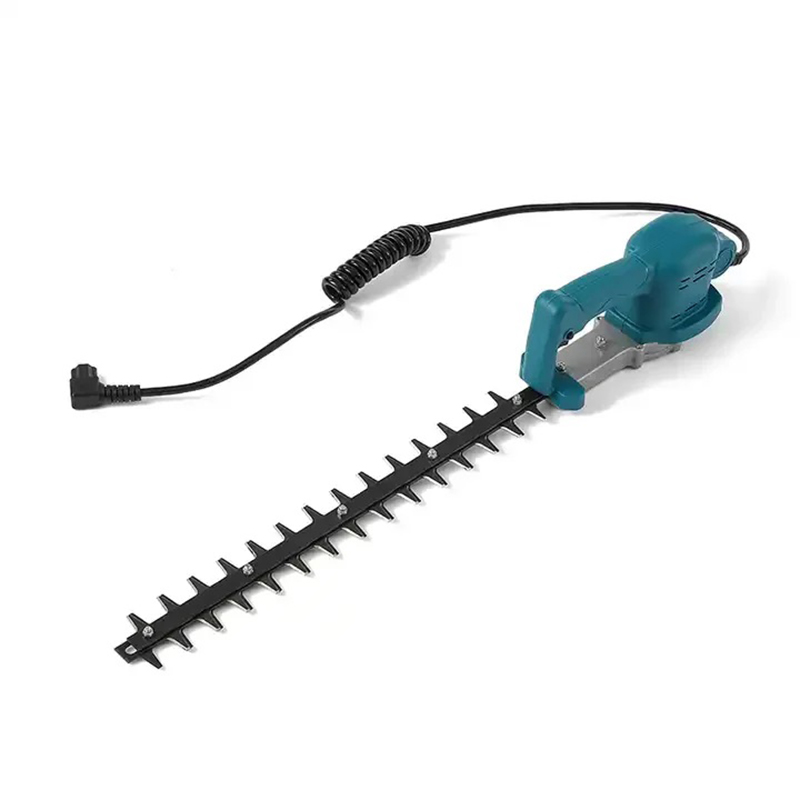
Corded electric machines offer a few unique advantages. They provide infinite runtime. They weigh the least among all categories since they carry no onboard fuel or heavy batteries. They also boast the lowest upfront purchase cost.
Their major flaw is the physical tether. You must drag an extension cord through your garden. You constantly face the risk of accidentally slicing through your own power cord.
Recommendation criterion: These are viable only for extremely small courtyards. We only recommend them if all your hedges sit within 100 feet of an accessible electrical outlet.
Power Type | Best Garden Size | Major Pros | Major Cons |
|---|---|---|---|
Cordless (Battery) | Up to 1 Acre | Quiet, instant start, zero emissions | Ecosystem lock-in, limited battery life |
Gasoline | 1+ Acres / Commercial | Unlimited runtime, extreme torque | Heavy, loud, high maintenance |
Corded Electric | Small Courtyards | Lightweight, infinite runtime, cheap | Cord limits range, tripping/cutting hazard |
Buyers frequently misunderstand how blade length impacts daily use. You must match the length to your specific plants and your own physical strength.
18 to 20 inches: These shorter blades excel in tight spaces. They work perfectly for intricate topiary work. They keep the weight close to your body, giving you excellent shoulder-level control.
22 to 24 inches: This represents the industry sweet spot. It provides enough reach to flatten the tops of standard residential hedges without becoming unwieldy.
26+ inches: Professional-length blades increase your cutting speed across wide areas. However, they shift the tool's center of gravity far forward. This forward pull causes rapid shoulder fatigue during prolonged sessions.
Cutting capacity dictates the maximum branch thickness your machine can accept. We advise you to walk your property and measure the thickest branches on your mature hedges before buying.
Locate the oldest, most established shrub in your yard (often Holly, Ficus, or mature Boxwood).
Use a ruler to measure the diameter of the internal woody branches, not just the soft green tips.
Select a trimmer capacity that exceeds this measurement by at least 1/8 inch to prevent jamming.
We recommend a 5/8-inch capacity for properties featuring mostly new, soft growth. For established, woody shrubs, you absolutely need a 3/4-inch to 1-inch cutting capacity. Anything less will bind the blades and damage your plants.
Strokes Per Minute (SPM) serves as a vital indicator of cut quality. The motor speed determines how fast the blades oscillate. Higher SPM ratings—typically 3,000 and above—yield significantly cleaner cuts. Clean cuts heal much faster. They reduce the risk of plant disease taking hold in ragged wounds. Lower SPM tools tend to tear or chew through stems, leaving frayed ends that turn brown and invite pests.
First-time buyers often fall into pricing traps. Retailers frequently list cordless models at highly attractive prices. You must check the fine print to see if they sell the trimmer as a "bare tool." A bare tool box contains no battery and no charger. If you do not already own compatible batteries from that specific brand, purchasing them separately drastically alters the final cost. Always confirm you are buying a complete "kit" if you are new to a battery platform.
Shopping online obscures the physical reality of garden tools. A 10-pound machine sounds perfectly manageable on paper. However, a 10-pound tool feels significantly heavier after 15 minutes of cutting above chest height. Leverage multiplies the perceived weight.
Best Practice: Visit a local hardware store. Pick up the display model. Make sure you test the tool's balance with the heavy battery actually inserted. Lift it to shoulder height and hold it for two minutes. This simple test reveals whether you can safely manage the equipment.
Many homeowners assume electric tools require zero maintenance. This is a dangerous misconception. Even the best Double Edged Hedge Trimmer requires consistent care. Plant sap and resin quickly build up on the metal surfaces. This sticky residue acts like glue. It creates massive friction between the dual-action blades.
Common Mistake: Ignoring resin buildup forces the motor to work twice as hard, eventually burning it out entirely.
You must perform regular resin removal. Spray a dedicated resin solvent or a lightweight machine oil onto the blades after every major use. This simple habit prevents premature motor failure and keeps the blades moving swiftly.
Imagine a typical suburban lot lined with standard privacy bushes and a few decorative shrubs. You cut these plants two or three times a year. They consist mostly of soft green growth.
Recommendation: Choose a 20-volt battery system. Select a 20-inch to 22-inch double-edged blade. Ensure it has a 5/8-inch cut capacity. Focus heavily on lightweight ergonomics rather than maximum power. A lighter tool ensures you actually enjoy your weekend yard work instead of dreading it.
Consider a sprawling rural or semi-rural property. Your landscape features decades-old hedges, thick laurel, and dense evergreens. The branches feel like hardwood.
Recommendation: Upgrade to a 36V-40V battery system, or opt for a gas-powered model. Select a 24-inch blade to cover more surface area. Demand a 3/4-inch to 1-inch cutting capacity. Additionally, look for models featuring a rotating rear handle. A rotating handle allows you to make vertical and angled cuts comfortably without twisting your wrists into painful positions.
Before you click purchase or drive to the store, follow this brief audit process to save money:
Walk into your garage or tool shed.
Inventory your existing cordless power tools (drills, leaf blowers, string trimmers).
Identify the major brands you already own (e.g., Makita, DeWalt, EGO, Ryobi).
Check the voltage and amp-hour ratings on your current batteries.
Search for a "bare tool" hedge trimmer from that exact brand to leverage the batteries you already purchased.
The "best" trimmer does not exist in a vacuum. The ideal tool perfectly balances your own physical limits against the specific botanical realities of your garden. You must assess branch thickness, yard size, and your tolerance for tool weight before making a decision.
For most users, a battery-powered, dual-action, Double Edged Hedge Trimmer equipped with a 22-inch blade and a 3/4-inch tooth gap satisfies the vast majority of residential garden maintenance requirements. It provides the sweeping efficiency you need without overloading your shoulders.
Take action today to prepare for the growing season. Evaluate your current battery platforms to see if you can buy a bare tool. Measure the thickest branches on your mature shrubs right now. Finally, review specific product warranties and weight specifications to ensure your investment serves your garden for years to come.
A: No. Hedge trimmers are designed specifically for soft new growth and slender stems. They can only cut branches up to their stated cut capacity, which usually maxes out at 1 inch. Forcing the blades into thicker tree branches will jam the mechanism, bend the teeth, and potentially burn out the motor. Thicker branches require heavy-duty loppers or a chainsaw.
A: We recommend sharpening your blades after approximately 50 hours of active use. However, you should sharpen them immediately if you notice the blade tearing leaves instead of making clean slices. Keep in mind that dual-action blades have complex angles. They often require a professional flat file or an angle grinder for proper maintenance.
A: No. This is a common misconception. While longer blades do cover more surface area per pass, they drastically decrease your maneuverability in tight spaces. They also shift the center of gravity forward, increasing arm and shoulder fatigue. For small, intricate hedges, a long blade is highly counterproductive and difficult to control.


