
Views: 0 Author: Site Editor Publish Time: 2026-08-08 Origin: Site


Choosing a sprayer goes far beyond a basic hardware purchase. It represents a vital operational decision. This choice directly impacts your daily labor efficiency. It also affects application consistency and chemical return on investment. If you make the wrong choice, you risk wasting valuable time and expensive materials.
The equipment market floods buyers with dozens of sub-categories. Manufacturers promote complex specifications constantly. However, all sprayers fundamentally break down into two core types. These types are manual units and motorized power units. Understanding this division helps you avoid hidden operational costs. Operator fatigue and inconsistent application rates destroy profit margins quickly.
This guide explores the foundational differences between human-powered and motorized equipment. We will help operations managers determine transition timelines accurately. You will learn exactly when to adopt high-capacity solutions. We explain how to evaluate key performance metrics step by step. This evaluation ensures you find the perfect fit for your specific workflow.
The Core Binary: The two fundamental types of sprayers are Manual (hand-pump/backpack) and Power (gas/battery motorized).
The Bottleneck Threshold: Manual sprayers lose viability when labor costs, operator fatigue, and inconsistent pressure compromise application quality.
The Mobility Solution: A trolley power sprayer bridges the gap between stationary heavy-duty rigs and portable backpacks, offering high-PSI output with ground-level mobility.
Decision Criterion: Purchasing decisions should be weighted on flow rate (GPM), pressure consistency (PSI), and maintenance availability.
What makes a commercial spraying operation truly successful? You need precise droplet sizes continuously. You must achieve exact chemical calibration. You also must minimize wasted labor hours. Precision prevents dangerous chemical drift. Proper calibration ensures the correct active ingredient dosage. Operational efficiency protects your entire department budget. You achieve true success when these elements align perfectly.
Operational indicators often signal a failing current setup. You might notice highly inconsistent weed or pest control. Pressure drops frequently cause these uneven field results. A tired operator pumps the handle less vigorously. This fatigue reduces the internal tank pressure. Lower pressure creates larger, heavier liquid droplets. Heavy droplets fall too quickly. They frequently miss the target foliage entirely.
Rising labor costs provide another serious warning sign. Manual pumping drains your operating budget slowly. Employees spend countless hours pressurizing tanks manually. Limited tank volumes compound this specific problem. Small tanks require constant, frustrating water refills. Workers must walk back to the mixing station repeatedly. These physical bottlenecks cripple daily route productivity.
Safety and compliance rules also demand your attention. Undersized equipment forces operators into prolonged chemical exposure. They face significant ergonomic strain daily. Repetitive pumping motions damage shoulders and wrists over time. High chemical exposure risks accompany frequent tank refilling procedures. Every single refill increases the chance of accidental toxic spills. You must protect your team from these physical hazards. Upgrading equipment solves these safety issues directly.
Manual sprayers represent the starting point for basic application tasks. This category includes standard handheld bottles. It includes heavy-duty compression tanks. It also encompasses manual backpack sprayers. They rely entirely on human kinetic energy. You pump a handle physically to create pressure. This action pressurizes the liquid inside the sealed tank. The compressed air forces chemical liquid through the wand nozzle.
These simpler tools shine in highly specific scenarios. You should use them for precision spot treatments. They excel in confined indoor spaces. They work exceptionally well for operations under 10,000 square feet. You can maneuver them easily around tight obstacles. These narrow environments often require careful application control. Micro-targeted chemical placement demands a lightweight, agile tool. Manual units provide this necessary physical agility perfectly.
However, manual sprayers carry notable operational risks. Human fatigue inevitably leads to severe pressure drops. Operators simply cannot maintain consistent pump strokes all day. This continuous pressure variance alters your droplet size drastically. It severely reduces overall chemical efficacy across the property. You cannot maintain a consistent spray pattern manually. Plants receive uneven chemical distribution as a result.
Furthermore, manual units lack proper commercial scalability. They are mathematically unviable for continuous, large-scale contracts. High-volume jobs require massive daily liquid output. You will lose money paying for the extra labor hours. A commercial crew cannot spray multiple acres using manual backpacks efficiently. You must recognize these rigid hardware limitations early. Scaling your business requires evaluating much better hardware.
Power sprayers utilize advanced electric batteries or combustion gas engines. They drive the internal pump mechanism automatically. This reliable automation ensures continuous system pressurization. You never rely on human physical effort again. They represent the next logical step for commercial growth. Expanding operations eventually need this exact hardware upgrade.
The core advantages address manual limitations directly. You get uninterrupted fluid pressure from start to finish. The PSI remains perfectly stable during application. They deliver significantly higher flow rates consistently. Industry professionals measure this output in Gallons Per Minute (GPM). Higher GPM means much faster area coverage. You can utilize extended reach easily. Stronger motorized pumps push liquid through much longer hoses. They also feature vastly larger tank capacities. Larger fluid tanks drastically reduce daily refill trips.
You will find several sub-categories within this motorized landscape. Each configuration serves a distinct operational purpose.
Skid-mounted units: These are large, heavy rigs. They sit securely in truck beds. They offer maximum liquid capacity for wide open spaces.
ATV-mounted units: These feature compact broadcast boom systems. Manufacturers build them for rough terrain. They cover open agricultural fields quickly.
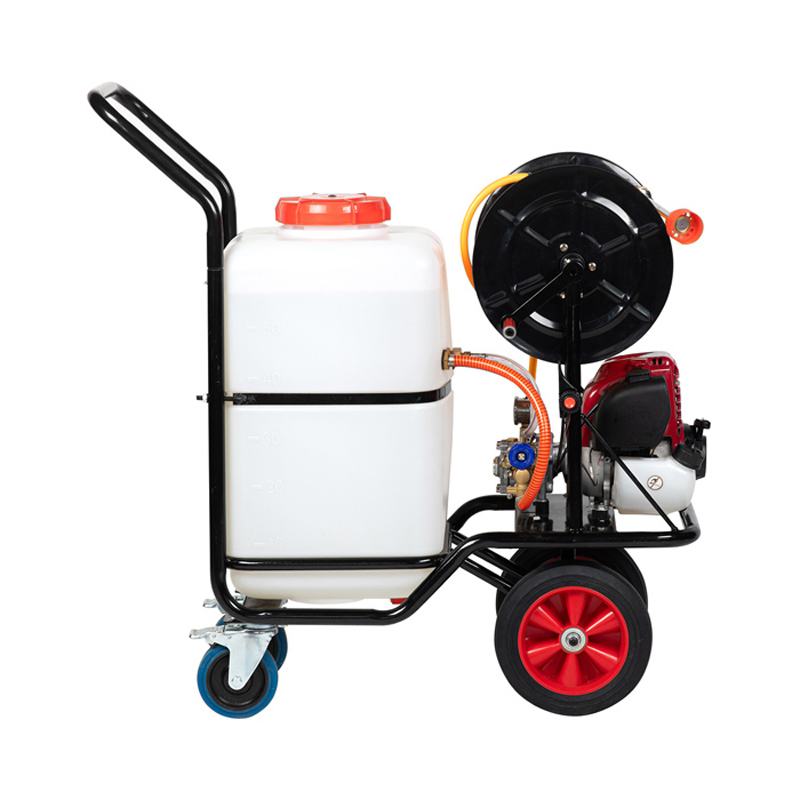
Wheeled units: These provide excellent ground-level mobility. A Trolley Power Sprayer fits this category perfectly. They move easily through narrow pathways and gates.
Implementation requires a realistic maintenance perspective. Motorized power sprayers carry a noticeably higher capital expenditure. You spend more money upfront to acquire them. They also require rigid equipment maintenance protocols. You must change the internal pump oil regularly. You must manage lithium-ion battery health carefully. Gas engines require fresh fuel and seasonal spark plug checks. You must also perform strict winterization procedures annually. Freezing temperatures will crack expensive pump housings quickly. You flush the entire system using special antifreeze. Following these protocols ensures your financial investment survives.
Many operations struggle with initial equipment selection. They feel stuck between small backpacks and massive truck rigs. A backpack lacks sufficient daily volume. A truck rig lacks necessary physical access. A Trolley Power Sprayer bridges this exact gap beautifully. It positions itself as the optimal middle-ground solution. You gain commercial-grade PSI output immediately. You also avoid the massive footprint of truck-mounted skids.
You must evaluate these mobile units carefully before purchasing. We assess them across three key technical dimensions.
Terrain Adaptability: Evaluate the wheel base design first. Pneumatic tires handle rough agricultural terrain efficiently. They absorb shock and protect internal pump components. Solid tires work better on smooth concrete floors. They resist punctures from sharp warehouse debris. You also need a highly durable chassis. Corrosion-resistant metal frames withstand daily harsh chemical exposure.
Pump and Motor Specs: Align the motor output to your primary goals. Electric motors suit quiet indoor environments perfectly. Gas engines offer maximum outdoor application power. Check the specific pump volume rating closely. Ensure the specifications match your required spray reach. You might need to spray tall trees vertically. You might need wide horizontal turf coverage.
Hose Management: Mobile applications require excellent hose control. Integrated hose reels provide significant operational value. They prevent frustrating kinks during active operation. Kinks block fluid flow and damage pump seals over time. Reels also eliminate dangerous tripping hazards entirely. You pull out only the required hose length.
These specific features translate directly into real-world success. Consider the daily challenges inside large commercial greenhouses. Workers need high liquid capacity constantly. However, they cannot drive large vehicles down narrow plant aisles. A wheeled motorized unit solves this problem instantly. Large residential estates face similar restrictive access challenges. Golf courses require delicate, lightweight turf protection. Heavy trucks compact the sensitive soil too much. Warehouse sanitization teams also face tight aisle clearances. They require substantial fluid volume in confined spaces. In these exact scenarios, a Trolley Power Sprayer becomes a mandatory operational asset.
Selecting the right equipment requires a highly systematic approach. You must match features directly to your business outcomes. Guesswork leads to wasted capital and frustrated employees. We built a simple framework for you. This tool guides your next major procurement decision accurately.
Primary Priority | Application Environment | Recommended Sprayer Type |
|---|---|---|
Ultra-low upfront cost | Confined spot-treatments | Manual Backpack Sprayer |
High-volume calibration | Gates, aisles, and pathways | |
Maximum liquid capacity | Open fields and roadways | Truck-Mounted Skid Sprayer |
Quiet indoor operation | Hospitals and schools | Battery-Powered Backpack |
Rough terrain broadcast | Uneven pastures | ATV-Mounted Sprayer |
Next, you should apply basic return on investment logic. Do not just look at the initial retail price. Calculate the physical manual labor hours saved. Suppose your operator spends three hours pumping manually daily. Motorized equipment reduces this task to one hour. You save two full hours of labor daily. Multiply those saved hours by your employee hourly rate. Compare this monthly financial savings against the capital cost. Motorized units usually pay off very quickly. They often cover their exact purchase cost within one season.
Finally, practice strict vendor vetting before purchasing anything. Equipment inevitably requires maintenance during busy peak seasons. Advise your procurement team to verify parts availability. Check for readily available replacement components locally. You will eventually need new rubber Viton seals. Brass nozzles wear out from abrasive chemical mixtures. Pumps occasionally require complete internal rebuild kits. You should also review warranty terms thoroughly. A strong warranty indicates excellent manufacturing quality. Avoid obscure brands offering zero local service support.
Choosing between manual and power sprayers dictates efficiency entirely. It firmly establishes your operational productivity ceiling. You simply cannot outwork human physical limitations forever. Manual sprayers will always remain essential tools. They handle precision, low-volume tasks perfectly. However, scaling a commercial operation changes everything. Large-acreage properties necessitate consistent motorized output.
You must take decisive action today. Here are your recommended next steps:
Assess your current weekly labor hours spent actively spraying.
Identify property zones experiencing severe manual pressure drops.
Audit all property access points for mobility restrictions.
Compare equipment specifications against your daily flow-rate needs.
Review available replacement parts from your local equipment distributors.
Map your biggest application bottleneck immediately. Upgrading your equipment protects your financial profit margins. It also empowers your workforce to achieve much better results.
A: The primary difference lies in the power source and pressure consistency. Manual sprayers require human kinetic energy to pump and pressurize the tank. This causes severe pressure fluctuations as the operator fatigues. Power sprayers use electric batteries or gas engines to drive the pump automatically. They deliver continuous, uninterrupted pressure for highly consistent chemical applications.
A: You should strongly consider upgrading when your application area exceeds half an acre. They also make perfect sense for commercial multi-site contracts requiring frequent daily applications. If your team spends more than two hours per day manually pumping, the labor savings will quickly justify the upgrade to a wheeled motorized unit.
A: Yes, they absolutely do. Motorized equipment features more complex moving parts. You must perform regular pump oil changes and monitor engine health. Battery-operated units require proper charging cycles and storage routines. You must also follow strict winterization protocols to prevent internal freezing. Manual units primarily just require simple seal replacements and basic tank rinsing.
A: Motorized power sprayers provide vastly superior chemical calibration. Manual pumping creates inevitable pressure drops. These drops alter droplet size and coverage rates randomly. Power units maintain exact, continuous PSI continuously. This steady pressure ensures your chemical application rate remains perfectly uniform across the entire treatment area. This maximizes both operator safety and chemical efficacy.


