
Views: 0 Author: Site Editor Publish Time: 2026-10-01 Origin: Site


Dealing with overgrown brush and thick weeds quickly turns a weekend chore into a frustrating battle. You stare at a property line swallowed by dense blackberry vines. You watch your standard weed whacker spit broken plastic string into the dirt. Standard trimmers snap. They stall. They simply lack the structural engineering required for heavy land clearing.
When vegetation fights back, you need specialized machinery. Reclaiming neglected land requires sustained torque and rugged durability. Upgrading your equipment is a necessary investment to protect your time and physical health. In this comprehensive brush cutter buying guide, we navigate through the essential specifications. We will cover everything from engine displacement and blade geometry to ergonomic configurations. This ensures you select the exact tool required to tame your property.
Understand the Configurations: These tools are engineered in three primary designs: handheld, backpack, and walk-behind. Your terrain dictates your choice.
Match the Power Source: Gas-powered engines deliver relentless torque for remote agricultural work. Modern battery-powered models provide a low-maintenance, quiet alternative for residential lots.
Blade Selection is Non-Negotiable: The density of the undergrowth dictates the cutting attachment. Nylon lines manage tall grass. Steel blades slice through fleshy weeds. Circular saw blades are mandatory for woody saplings.
Prioritize Ergonomics: Features such as U-shaped bike handles, straight solid-steel shafts, and isolated anti-vibration mounts prevent operator fatigue during prolonged clearing sessions.
At its core, a brush cutter is a heavy-duty agricultural and landscaping tool specifically engineered to eradicate dense thickets, heavy foliage, brambles, and small trees. These rugged machines thrive in environments where standard lawnmowers cannot operate. Think steep embankments, deep ditches, and uneven, rocky terrain.
While it may share a passing resemblance to a standard string trimmer, the internal mechanics and functional capabilities differ vastly. The most glaring distinction lies in power and structural integrity. Heavy-duty cutters utilize larger displacement engines, typically ranging from 25cc to over 50cc, designed to generate massive low-end torque. To transfer this kinetic energy without shattering, they rely on thick, solid-steel straight drive shafts rather than the flexible wire cables found in residential weed whackers. This rigid construction prevents the shaft from twisting violently when the blade strikes a solid object like a hidden stump.
Specifically, the cutting attachments set them apart. String trimmers are restricted to nylon polymer lines that shred against hardwood. Conversely, reinforced gearboxes allow these robust machines to spin solid metal blades. This physical sawing action easily powers through woody materials.
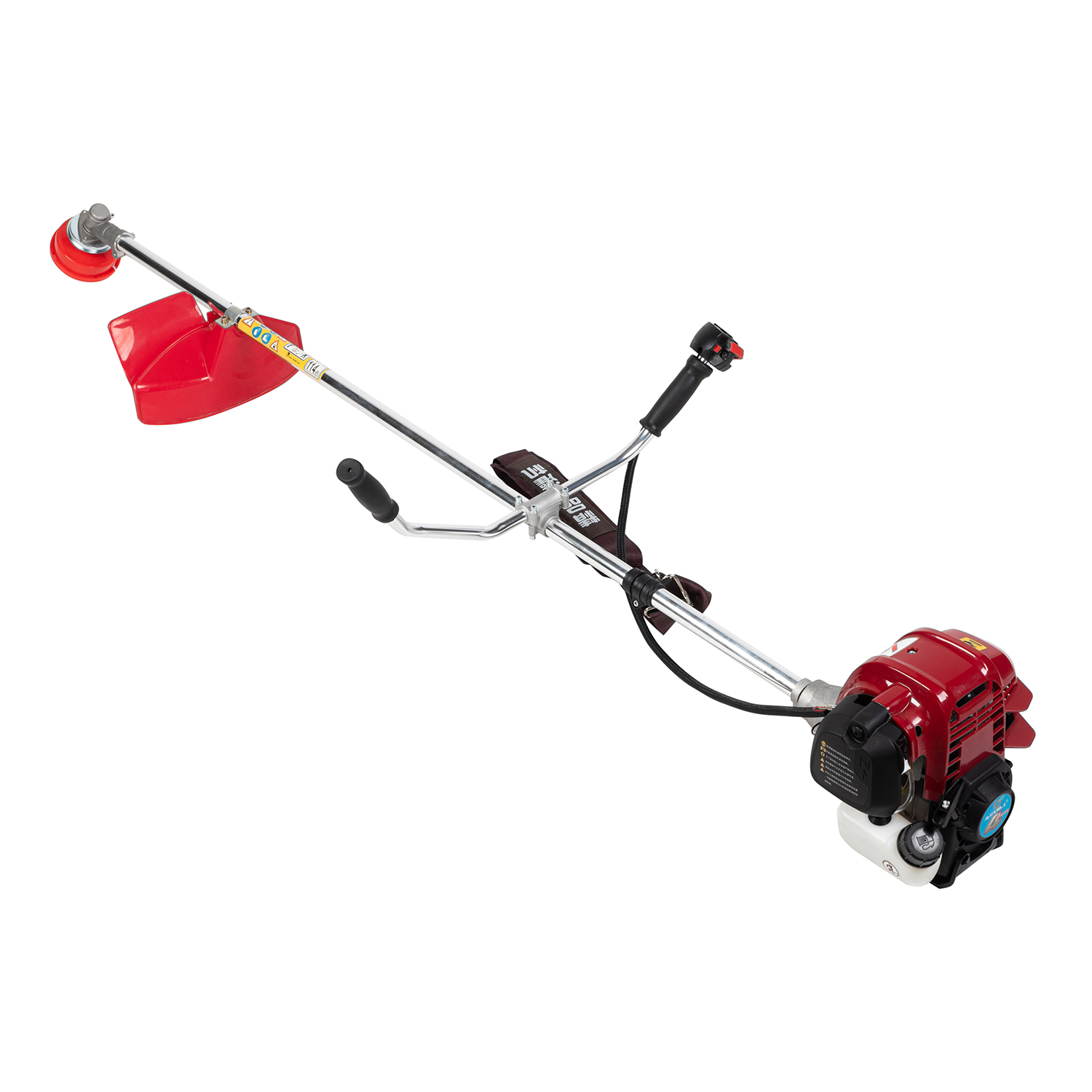
Selecting the correct physical framework is arguably the most critical step in your purchasing journey. The topography of your land and the expected duration of your work shifts directly influence which of the three main designs you should take home. Let us look at the exact specifications required for different terrains.
The handheld configuration is the industry standard. It features a straight shaft with the engine mounted at the rear to counterbalance the cutting head at the front. The operator supports the machine using a shoulder harness and shaft-mounted handles. This design offers unparalleled vertical maneuverability. It is the go-to choice for navigating tight spaces, working around concrete obstacles, and clearing moderate brush on relatively flat ground.
If your property features challenging topographies like steep hillsides or deep ravines, investing in a backpack brush cutter is a highly effective strategy. In this setup, the heaviest component is detached from the wand and mounted onto a padded, ergonomic backpack frame. A flexible drive cable connects the power plant on your back to the rigid cutting shaft in your hands. Commercial-grade backpack units often feature robust 42.7cc or 52cc 2-stroke engines. By shifting the mechanical weight away from your arms and distributing it across your core and shoulders, operator fatigue drops drastically. You can clear brush for hours without strain.
When tasked with reclaiming massive, flat fields entirely overgrown with dense vegetation, a hand-push type brush cutter provides the ultimate solution. Resembling a rugged, oversized lawnmower, these machines feature large pneumatic tires and a high-powered engine mounted on a wheeled chassis. The primary advantage here is that the operator bears zero machine weight. You simply guide the unit forward. High-powered 52cc hand-push models deliver a massive cutting swath, allowing you to process large tracts of land in a fraction of the time. However, their bulky footprint makes them unsuitable for tight confines.
Design Type | Ideal Terrain | Typical Engine Size | Best Application |
|---|---|---|---|
Handheld | Flat to mild slopes, tight spaces | 25cc - 40cc | Fence lines, residential borders, obstacle navigation |
Backpack | Steep hills, ditches, uneven ground | 42.7cc - 52cc | Prolonged commercial clearing, rugged topography |
Walk-Behind | Large flat fields, open pastures | 52cc and above | Heavy acreage clearing, dense meadow reclamation |
A closer look at the current landscaping equipment market reveals a fascinating evolution in how these tools are engineered. Historically, raw horsepower was the only metric that mattered. Today, manufacturers are heavily pivoting toward operator health and environmental compliance.
Due to increasingly strict noise and emission regulations globally, there is a noticeable industry shift toward highly efficient 4-stroke engines. These power plants burn cleaner and quieter than their 2-stroke predecessors. Simultaneously, the commercial sector is rapidly adopting high-voltage lithium-ion platforms. Ranging from 36V to 80V, these battery-powered units are no longer just for small suburban yards. They now output torque levels that rival mid-range gas engines. This offers commercial crews a viable way to work in noise-restricted zones like hospital grounds and school campuses.
Beyond power sources, ergonomic design has taken center stage. With an aging workforce in the agricultural and landscaping sectors, brands are investing heavily in advanced anti-vibration systems. Sophisticated rubber dampeners and floating handles are now standard on premium models. This engineering mitigates the risk of Hand-Arm Vibration Syndrome and significantly extends comfortable operating times.
The power plant you select dictates not only the cutting aggression of the machine but also the maintenance schedule you will be bound to follow.
Gasoline engines remain the undisputed kings of remote agricultural work. When you are three acres deep into a wooded lot, you cannot simply plug into a wall. You need the unlimited runtime that a jerrycan of fuel provides. These are divided into two categories.
Two-stroke engines are lighter and capable of hitting exceptionally high Revolutions Per Minute. They are aggressive cutters. However, they require the operator to precisely mix two-cycle engine oil with gasoline, and they tend to run louder.
Four-stroke engines feature separate compartments for oil and gas. This eliminates the tedious chore of fuel mixing. While slightly heavier, they generate superior low-end torque. This makes them perfect for pushing through thick, tangled vines without stalling out.
Recent leaps in high-capacity lithium-ion technology have transformed the electric equipment market. They produce zero direct exhaust emissions and operate at a hum rather than a roar. You get instant push-button starts and virtually zero engine maintenance. There are no spark plugs to gap, no air filters to clean, and no carburetors to rebuild.
The trade-off is runtime. Under the heavy load of a metal blade chewing through thick brush, a battery may deplete in thirty to forty-five minutes. Unless you invest in multiple expensive backup batteries, your workday pauses while the unit charges.
Equipping a high-powered engine is pointless if you pair it with the wrong cutting attachment. Using an improper blade is highly inefficient and can severely damage the machine's internal gearbox.
Most units can equip a heavy-duty bump-feed head utilizing thick nylon line. This setup is ideal for clearing tall, fleshy grasses. It allows you to trim safely around hard obstacles like chain-link fences, hidden rocks, and concrete foundations where a metal blade would trigger a violent, dangerous kickback.
Featuring anywhere from three to eight large, aggressive teeth, solid steel blades are designed for dense, fibrous weeds, tall reeds, heavy brambles, and tangled vines. The wide spacing between the teeth prevents fibrous plant matter from wrapping around and binding the gear head. They smash and slice efficiently but should never be used on solid wood.
Resembling the circular saw blades used by carpenters, these attachments feature dozens of small, sharp teeth. They are specifically engineered to chip away at hardwood. If you need to clear woody brush, thick bushes, or saplings up to three inches in diameter, this is the only blade that will survive the job.
Beyond the engine and the cutting head, the physical ergonomics of the machine will ultimately determine your comfort and efficiency in the field.
Loop handles consist of a single circular grip mounted on the shaft. This design offers superior control for vertical cutting and navigating tight, confined spaces. In contrast, bike handles extend outward like bicycle handlebars. If you are clearing large, open spaces, a bike handle is mandatory. It allows you to keep your back straight and use a smooth, scythe-like sweeping motion. You utilize your core muscles rather than exhausting your arms.
Always insist on a straight shaft. Straight shafts house a solid steel drive rod, which transfers torque efficiently. It easily withstands the violent shock of a metal blade striking a hidden stump. Curved shafts rely on flexible cables that are highly prone to snapping under heavy loads. Additionally, straight shafts offer a longer reach, keeping you safely distanced from the cutting debris.
Operating a high-displacement engine attached to a solid metal pole creates severe vibrations. Over time, this leads to numbness and joint fatigue. Premium models feature rubber isolation mounts that physically separate the engine and handles from the main shaft. This absorbs the kinetic energy before it reaches your hands.
A commercial-grade unit can weigh upwards of twenty pounds. Supporting this dead weight with just your arms is unsafe and exhausting. Ensure the model you select is compatible with a high-quality, padded double-shoulder harness. A proper harness distributes the machine's weight evenly across your shoulders, back, and hips.
A metal blade spinning at nine thousand RPM is an inherently dangerous piece of equipment. It can turn loose gravel into high-velocity projectiles in a fraction of a second. Strict adherence to Personal Protective Equipment is non-negotiable.
Standard safety glasses are insufficient. Operators should wear high-impact glasses paired with a full-face mesh shield. Unlike solid plastic shields that fog up in humid summer weather, mesh shields breathe while effectively stopping large wood chips and flying brambles. Because gas-powered engines operate at deafening decibel levels, industrial-grade ear muffs are required to prevent permanent hearing loss. Finally, protect your extremities with heavy-duty leather gloves, thick brush chaps, and steel-toed work boots with deep treads to maintain traction on slippery, uneven terrain.
Consistent, preventative maintenance is the only guaranteed way to protect your investment and ensure the machine fires up on the first pull season after season.
After every clearing session, allow the machine to cool. Use a stiff brush to clear accumulated sap, dirt, and plant matter from the cooling fins of the engine block. Inspect the cutting head to ensure no wire or thick vines have wrapped around the gearbox shaft, which can tear the internal seals. Check all visible nuts and bolts. The intense vibration of the tool causes hardware to back out over time.
For gas models, fuel management is critical. Ethanol-blended gasoline degrades in as little as thirty days, leaving a sticky varnish that gums up the carburetor. Before storing the machine for the winter, empty the fuel tank completely and run the engine until it stalls to clear the lines.
Lastly, respect your blades. A dull blade forces the engine to work harder, increasing fuel consumption and burning out the clutch. Inspect metal blades before every use. If a steel grass blade is dull, sharpen it evenly with a flat file to maintain rotational balance. If a blade shows any signs of hairline cracking or missing teeth, discard it immediately. A compromised blade shatters at high speeds, resulting in catastrophic shrapnel.
Yes, but only small ones. When equipped with a specialized circular saw blade featuring chisel teeth, a heavy-duty model can easily saw through woody brush, dense thickets, and saplings up to three inches in diameter. They are not designed or safe for felling mature trees.
For light residential work and clearing moderate weeds along fence lines, an engine displacement of 25cc to 30cc is generally sufficient. If you are tackling heavy agricultural land clearing, thick brush, and daily commercial use, you should step up to a powerful engine ranging between 42cc and 52cc or higher.
It depends entirely on the terrain you are managing. Backpack models are vastly superior for steep slopes, deep ditches, and long hours of continuous work because the heavy engine weight is supported by your back and hips rather than your arms. Handheld units offer better precision and maneuverability for flat, tight spaces.
Generally, no. Unless your specific string trimmer is explicitly rated by the manufacturer as brush cutter capable and features a straight, solid-steel drive shaft, attaching a metal blade is highly dangerous. The flexible cable inside a standard curved trimmer snaps under the heavy load of metal striking wood, ruining the tool and posing a severe safety hazard to the operator.
For commercial applications, you should inspect and top off the gearbox grease every twenty-five to thirty operating hours. Using a high-quality lithium-based grease ensures the internal bevel gears remain lubricated under extreme heat and friction, preventing premature mechanical failure.
When facing vegetation over two feet tall, avoid cutting at the base immediately. Instead, use a two-pass method. Sweep the cutting head in one direction to chop the upper half of the grass, then swing back in the opposite direction to cut the remaining stalks near the ground. This prevents long fibers from wrapping around and binding the gear head.
Armed with the engineering knowledge from this guide, you are fully prepared to evaluate your property's terrain. You can now match it with the correct power source, ergonomic design, and blade type to make a confident purchase. Do not let overgrown acreage dictate your property lines. Explore a reliable, commercial-grade brush cutter selection today and find the exact model engineered to conquer your toughest land clearing challenges.


